Cuba Briefing
The Caribbean Council's Exclusive Publication on Cuba

The Cuba Briefing is your news and insight resource for the latest developments in Cuba.

Published since the mid-1990s, Cuba Briefing is an unparalleled resource of detailed analysis on economic, social and political developments going on inside Cuba including analysis on the Cuban government’s priorities and policy developments towards foreign investors, economic reform, and the growth of the private sector.

Cuba Briefing is produced on a weekly basis by David Jessop, the director and founder of the Cuba Initiative and Non-Executive Director of the Caribbean Council, providing expert insight and a longer term lens on week-to-week developments in the country.

Don’t miss out on the latest news business and opportunities from the region. Subscribe to receive the Cuba Briefing Publication directly to your inbox. Subscribers receive 23 editions over 12 months. Click to Subscribe.

Leading Articles Featured in Cuba Briefing

US opinion polls show that the Democratic Presidential nominee, the former Vice President Joe Biden. is polling significantly less well than President Trump with Cuban American voters. 

A recent Miami Herald poll noted that among Cuban Americans in Miami Dade, Trump leads Biden by 38 percentage points. More generally in Florida, according to an NBC News/Marist poll, the former Vice President trails Trump by 46% to 50% among Latin voters, a group that supported Hillary Clinton in 2016. 

Trump narrowly won Florida four years ago by a little more than 1%, a margin of fewer than 113,000 votes out of more than 9.5m cast. Although Biden does not necessarily need Florida to win the presidency, the state has backed the national winner in every election except one since 1964. 

US polling indicates that among many Latin and Cuban American voters, the allegation by Trump that Biden is a ‘socialist’ and sympathetic to Cuba and left leaning governments has stuck, especially with those who left Cuba, Venezuela, and Nicaragua. To try to respond, the Biden campaign has begun to pay more attention to voters of Latin background in Florida and speaking to and placing adverts on local English and Spanish language TV stations. 

In the over three and half years since Donald Trump took office US relations with Cuba have deteriorated dramatically, détente has been reversed, the economic and financial embargo has been tightened and wide-ranging new sanctions have been introduced. The expectation is that should Trump be re-elected in November, US policy towards both Venezuela and Cuba will intensify with the unlikely objective of forcing a dialogue on political and economic change, something the Cuban Government would not accept. 

In contrast, if Vice President Biden wins, he is expected to adopt a policy similar to that pursued by President Obama. Biden recently told NBC 6 that he will restore relations; would reverse the present administration’s policies; permit Cuban Americans to send more money to relatives living on the island; and “pursue a policy advancing interest and empowering the Cuban people to freely determine their own outcome and future.” 

[Photo: ADNCUBA]

Despite Cuba’s Central Bank denying rumours on timing, there are growing indications that Cuba may be close to announcing plans for the unification of its economically distorting dual currency system which has been in place since 2004.

On 10 September, the Central Bank issued a statement denying widespread social media posts indicating that the unification of its two legal currencies will take place on 1 October.

The statement added that when such measures are to be adopted the decision will be communicated in good time through official channels. Monetary unification, the Bank said, will not affect the cash in the possession of Cubans, nor the balances of they hold in their bank accounts.

The Central Bank’s statement came on the same day that Reuters reported that Cuba is planning a quick one-to-one devaluation of the domestic peso against the US dollar.

The news agency said that as a part of monetary reforms ‘planned before the end of the year’, the Cuban authorities

will unify the two currencies (the domestic peso, the CUP, and the convertible peso, the CUC) circulating in Cuba.

Quoting two unnamed local sources and a foreign businessman with knowledge of the plan, Reuters indicated that the domestic peso will be retained and the CUC, which is at par with the US dollar, will be eliminated. At present, state enterprises use a buy rate for the CUP to the CUC of 24 and a sell rate of 25.

The eventual rate at which two currencies are unified and how the process of implementation will work are still unknown.

However, in August two lengthy discursive articles appeared in state media explaining why the dual currency system is distorting Cuba’s economy, the complex issues government is trying to address, and the likely effects of unification on exports, imports and prices.

One appearing in late August in Cubadebate quoted President Díaz-Canel’s comments to the Council of Ministers about the urgent need to “immediately correct all possible distortions”. The article noted his focus on concluding the process of monetary and exchange unification rapidly in order “to remove almost all of the obstacles that we have today for the development of the productive forces in our country ”. It also noted his earlier commitment to complete the analysis of monetary and exchange unification and “to approve it in the shortest possible time” and implement it “in its entirety” (See Cuba Briefing 6 January 2020) .

Cubadebate went on to note that the impact of the pandemic had made clear that exporting had become a necessity and, for this to occur, it was essential to continue ‘untying old obstacles’ such as exchange rate duality which, it said, had hindered Cuba’s business system.

The online platform then went on to report the views of Lazaro Toirac, Advisor to the Ministry of Economy and Planning. Noting that although current conditions made unification a challenge, Toirac told Cubadebate that Cuba cannot advance with obsolete instruments and required an economy that sends us the correct signals, whether good or bad. The equivalence of the Cuban peso with the dollar, he said, had obscured the profitability of companies, effectively subsidised unprofitable companies and discouraged exports.

Toirac told the publication that once the expected ‘day zero’ arrives and the Cuban peso is devalued, exporters will receive the corresponding incentives, while importers will see purchases become more expensive causing them to “turn to the domestic economy.”

He also suggested that the objective will be “to try to bring it (the CUP) closer to an exchange rate that can be recognised in its comparison with (value against) international currencies, so that there is clarity in transactions”.

Noting however that this will cause the cost of production to rise, and with it the prices of goods and services, he said that the solution would either be to subsidise the prices that rise as a result of increased costs, or to raise incomes and pensions.

The latter course of action is thought to be more likely if as some analysts believe that the final CUP to US Dollar rate is set at somewhere between CUP5 and CUP10. The Cuban government has consistently said that it will work to ensure that CUP dependent Cubans and pensioners are not left behind by the process of economic restructuring.

The Caribbean Council is able to provide further detail about all of the stories in Cuba Briefing. If you would like a more detailed insight into any of the content of today’s issue, please get in touch
[The Cuban History Website, 2020]

JSC Zarubezhneft, the Russian state-controlled oil company, has said that it has successfully launched its first horizontal well in flow mode, in Cuba’s Boca de Jaruco field.

The company reported in a statement that the initial onshore oil flow was 52 tons per day of extra viscous oil. The first well is exploratory but if successful the company plans over the next two years to drill 30 wells. If large volumes of natural gas are also obtained, this could be used by a nearby Energás plant.

Sergey Kudryashov, the Managing Director of JSC Zarubezhneft said that the Boca de Jaruco project was an important element of the company’s strategy to maintain technological leadership in the industry and innovative approaches to oil production.

“This year we have started a new stage of field operations with the launch of the first horizontal well. We continue to improve the extra viscous oil production processes on this project and are focused on achieving even greater results in the future.

The project involves new developments and technical solutions from national manufacturers, as well as equipment capable of operating in an aggressive environment and at high temperatures”, he said.The project is being implemented in conjunction with Union Cuba-Petróleo (CUPET) and involves oil enhancement technology that has been developed jointly by JSC Zarubezhneft with the Kazan Federal University (Volga Region). 

Russian and Cuban reporting said that by using catalytic aqua thermolysis technology, Zarubezhneft had managed to reduce the ratio of injected steam to produced oil by almost half compared to similar projects in other countries. The technology being used for catalytic aqua thermolysis for in situ oil refining is protected by patent. 

In October 2019, the then Prime Minister of Russia, Dmitri Medvedev, inaugurated drilling on the horizontal extraction well.

Kudriashov has previously told the media that the petroleum output from the joint venture with CUPET will be used to meet internal demand and making oil Cuban production efficient. The project according to previous Zarubezhneft statements is expected to cost in its first phase €100m (US$133m) and result cumulatively in a production volume over 10 years of up to 2m tons of oil.

Previous Cuban reports quoting Víctor Moya, the Head of the Reservoir Engineering Group of Cuba’s Western Oil Drilling and Extraction Company indicate that the Boca de Jaruco project is aimed at extracting oil from ‘Layer M’ , a type of sedimentary rock identified as having very heavy oil at seven degrees API but previously unrecoverable because of the absence of the necessary technology. 

Moya said that as Layer M was not homogeneous, it was not possible to know how much crude could be extracted, but that the project would define the best reservoir characteristics for future exploitation. He was also quoted as saying that Russia, in addition to having the technology would be able to learn about ‘new practices and tools to use’based on their experience of drilling and subsequent extraction. 

Cuba produces about 2.6m tons of crude oil annually (16.3m barrels) and approximately 1bn cubic meters of natural gas.

The Caribbean Council is able to provide further detail about all of the stories in Cuba Briefing. If you would like a more detailed insight into any of the content of today’s issue, please get in touch

Cuba has begun clinical trials of a potential coronavirus vaccine known as Soberana 01.

Granma, the official voice of Cuba’s Communist Party, reported in late August that the country’s overall biotech and pharmamanagement group BioCubaFarma has received permission from the country’s regulatory authorities to begin clinical trials of the candidate vaccine. The group said that it was ‘capable of producing a strong immune reaction to a SARS-COV-2 infection’ (COVID-19).

BioCubaFarma separately reported that an industrial production strategy is being developed to build capacity with the goal of ‘having available the millions of doses needed to protect our population’ once the studies are concluded.

BioCubaFarma said that, working together, Cuban institutes and universities had ‘satisfactorily concluded the drug’s development stage and pre-clinical studies on animals, producing the scientific findings required to support authorisation, by Cuba’s Centre for State Control of Medications, Medical Equipment and Devices (Cecmed), to conduct clinical trials’.

Initially identified as FINLAY-FR-1, the vaccine project is being led by the Finlay Vaccine Institute and the Centre for Molecular Immunology working with the University of Havana’s Chemical and Biomolecular Synthesis Laboratory. The clinical trial phases will be followed by other clinical studies before the vaccine is considered ready for use.

The official announcement indicated that the Finlay Institute had gained invaluable experience from having accumulated research over thirty years in other epidemics, and specifically in the meningitis epidemic in the 1980s.

Soberana 01 has reportedly already been tested on the three Cuban scientists who developed the candidate vaccine. All reportedly developed ‘a high immune response’ which was confirmed after a second dose was applied.

Cuba’s candidate vaccine is the thirtieth internationally, and the first in Latin America and the Caribbean, to receive authorisation for clinical trials among the more than 200 under development globally.

The Caribbean Council is able to provide further detail about all of the stories in Cuba Briefing. If you would like a more detailed insight into any of the content of today’s issue, please get in touch

Cuba’s Minister of Foreign Trade and Foreign Investment, Rodrigo Malmierca, has explained how recently announced measures aimed at encouraging non-state enterprises to export and import will work (Cuba Briefing 20 July 2020).

Speaking on the flagship television programme Mesa Redonda, he said that 36 Cuban companies specialised in foreign trade will provide import and export intermediary services to all non-state forms of enterprise.

Responding to publicly expressed doubts among non-state entities, the minister sought to calm concerns about why they have not been allowed to directly carry out foreign trade activities.

Indicating that Government‘s intention was to facilitate the process, he said that small businesses everywhere relied on specialised companies to support commercial imports and exports. The purpose, he said, was to help cooperatives and self-employed workers engage in the process and to enable small entities to go to the international wholesale market to obtain what they require to operate.

“One of the main objectives of this measure, and one of the key actions that we need in Cuba, is for exports to grow, for imports to be more rational and for us to link together all forms of management in order to have better economic results”, Malmierca said.

Addressing other concerns about the introduction of state-controlled intermediaries to undertake such functions, he said that the decentralisation of independent import/export activities was not something new, but was intended to deepen and put all forms of economic management on an equal footing. “We want exporting, so necessary for our country, especially at this juncture, to be carried out efficiently”, the minister said.

In his remarks he said that a legal framework would be established allowing for such transactions to take place and for the settlement of disputes. On pricing, he said, this will be defined between the parties and that the intermediary companies had mechanisms to find the best prices. The minister stressed that the commercial margins that will be used in providing services to non-state entities will be “minimal” and Government’s intention was, he said, “not for the (intermediary) company to become more profitable”.

Malmierca told television viewers that, in future, a percentage of foreign exchange earnings could be retained by non-state entities for their own development, either to import or for in-country expenditure. However, this would have to be agreed between the parties. “We will try to avoid any type of limits that can be misinterpreted as a prohibition or obstacle,” he added.

The Minister said that payments will be made through bank debit cards; the Ministry of Economy and Planning, the Ministry of Finance and Prices, and the Central Bank will issue legal regulations to make the process work; and that the details will be set out on the Ministry’s website, on social networks and in the media.

“We will require our state companies to be able to provide the excellent service that other actors or non-state forms aspire to have in this management”, Malmierca said, before going on to indicate that his ministry had identified 382 non-state entities that have the potential to export in sectors including agri-food, crafts, construction, ornamental birds, plastic products, educational toys, saddlery, catering, glassware and upholstery services.

“We are sure that this initiative will turn out well, non-state forms of management will be satisfied with the services provided by specialised companies, and we will be in a position to boost exports from both (types of) actors in the economy, since non-state forms of management are a key group that must increasingly play an important role in the development of our country ”, he said.

The proposed state intermediaries were not named.

The Caribbean Council is able to provide further detail about all of the stories in Cuba Briefing. If you would like a more detailed insight into any of the content of today’s issue, please get in touch

The Cuban government has outlined the first phase of an integrated series of economic measures which, if fully implemented and successful, could radically alter the structure and functioning of the Cuban economy within its centralised system of planning.

The changes place emphasis on a greater role for the private sector, relating supply to demand, stimulating domestic production, localising decision making, rapidly unifying Cuba’s dual currency system, and removing the stultifying effect of the Agriculture Ministry in particular.

Detailing the measures and the background for making the changes , Cuba’s President, Miguel Díaz-Canel, told television viewers on 16 July, that the country can no longer

continue taking the same approach in relation to the economy.

The needed results, he said, cannot be obtained against the background of the complex health and economic crisis the country has been trying to address and the decision by US and the country’s enemies to fight a war against Cuba on multiple fronts.

This meant, he said, that with the agreement of the Politburo of the Communist Party and the Council of Ministers, as a first stage, measures aimed at strengthening the economy would be introduced with immediate effect.

Díaz-Canel said that proposed ‘economic transformation’ measures will be applied gradually but simultaneously. This will mean, he said, that Cubans must learn to live with fewer imports and more exports, develop national production to satisfy internal demand, and strengthen territorial production and the decision-making role of local government.

Cuba’s President said that food production and food sovereignty will be prioritised, and the present controlling role of the Ministry of Agriculture will be transformed. This will mean he said, “we will have to adjust agricultural companies, relations between state companies and other forms of management and ownership that contribute to food production, the marketing system, and incentives and credit support”.

Díaz-Canel also told Cubans that way that internal trade in Cuba presently works will require socialist state companies to be reorganised so they are “more responsive”, coded language taken to mean less bureaucratic and able to relate supply to demand rather than just meet planning norms. “The monetary environment in which foreign investment operates” will change and national industry will become “the main provider of goods and services that the economy demands”, he said.

Speaking about improving the role of the non-state sector, Cuba’s President said that the immediate priority will be “to remove obstacles, eliminate the tax on the purchase of the dollar, articulate mechanisms for channelling remittances based on economic and social development, and on the design and implementation of fiscal incentives (to address) public debt with the participation of various sectors”.

This process, he said, will also involve analysis and approval “in the shortest possible time” of how the country completes the task of monetary and exchange unification of Cuba’s dual currency system. “When we implement it, almost all of the obstacles that we have today for the development of the productive forces will be eliminated,” Díaz-Canel said.

The Caribbean Council is able to provide further detail about all of the stories in Cuba Briefing. If you would like a more detailed insight into any of the content of today’s issue, please get in touch

Against a background of no deaths and no new critical cases for thirteen days, a group of prominent Cuban scientists have discussed the epidemiology of COVID-19 and the treatments that are proving effective in Cuba. Their comments indicate the importance of early testing and the pharma products that Cuba has found to work in treating carriers of the virus.

Speaking on the Cuban flagship television and radio programme, Mesa Redonda, Dr María Guadalupe Guzmán, Head of Research at the Pedro Kourí Institute of Tropical Medicine, said that all studied polymerase chain reaction (PCR) samples taken from both symptomatic and asymptomatic individuals demonstrated that the viral load was high in both categories.

Cuban tests indicated that the while the infection normally became apparent after five to seven days, there were significant variations in some individuals tested. A number, she said, remained asymptomatic for much longer periods leading to them being discharged after testing even though they were carriers of the virus.

Speaking about treatments, the Director of Biomedical Research at the Centre for Genetic Engineering and Biotechnology (CIGB), Dr Gerardo Guillén, said that clinical studies “carried out with extreme speed during the epidemic itself” compared the effectiveness of an Interferon alfa 2b (Heberon) treatment, to a combined application of Heberon and Interferon ganma (Heberferon).

He said that one very important decision that had been taken was to introduce Interferon alfa 2b very early in Cuban treatment protocols due to the evidence of its antiviral and immune-enhancing capacity.

Studies showed, he said, that after starting treatment with Interferon alfa 2b, 50% of those treated tested negative for the virus on the fifth day, and that when also applying Heberferon, 50% of patients took only three days to test negative. This led, he said, to accelerating the taking of PCR samples in June and July to testing on the first day. Subsequent PCR samples were then taken on the ninth and tenth day to confirm and discharge a patient if the result was negative.

He also said that, based on the research carried out with China, it was decided not to treat asymptomatic cases with chloroquine, but only with interferon. “Interferon alfa 2b was given to asymptomatic patients who did not have comorbidities, and Heberferon was given to those who did have it,” he said.

Guillén said that in Cuba, asymptomatic patients were also treated because those without symptoms had a high capacity to reproduce the virus. This decision, he said, influenced the speed at which Cuba had been able to control the spread of the virus.

During the television and radio programme, it was revealed that Cuba has seven institutions dedicated to COVID-19 research and that four new laboratories will be opened in Ciego de Ávila, Holguín, Matanzas and the Isle of Youth to improve surveillance of COVID-19 as well as other diseases.

Cuba Briefing is available on a subscription-only basis. Please click here to sign up to a free trial.

Despite having made significant progress in controlling the spread of COVID-19, it is becoming apparent that Cuba now faces as big a challenge in overcoming food shortages.

Articles appearing almost daily in the Cuban media indicate that the country’s inefficient, bureaucratic and centrally managed food production system is failing to meet planned targets for staples including rice and pork that form an essential part of the country’s diet. They note that the fall in foreign exchange earnings from tourism, the tightening of the US embargo, and growing difficulties in servicing debt are making it harder to source overseas shortfalls in essential foodstuffs.

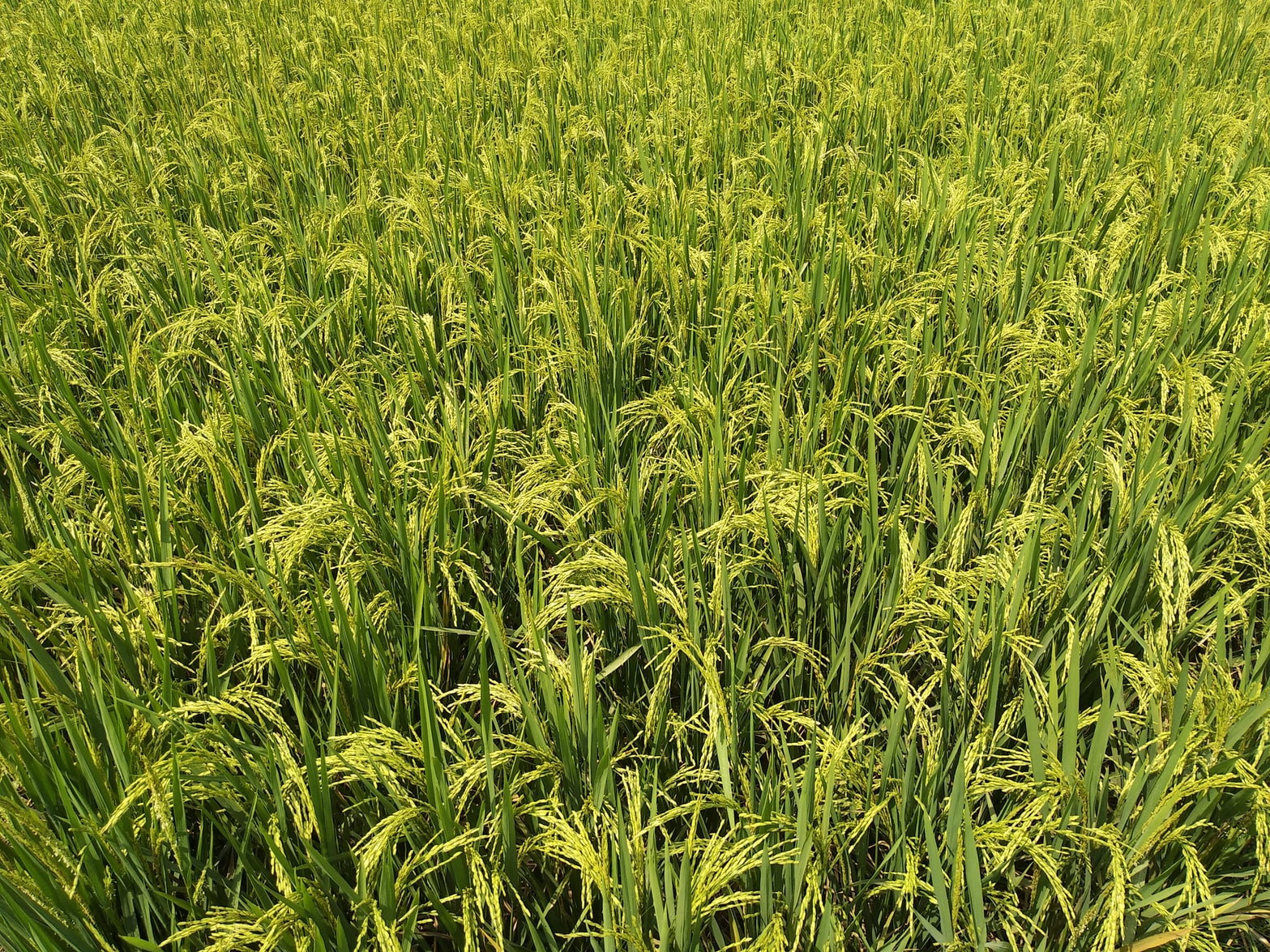
In the case of rice, recent Cuban media coverage has suggested that the sector is likely to see this year lower than anticipated levels of domestic production.

Cubadebate, quoting one senior official, Lázaro Díaz, the Director of the Rice Technology Division of the Ministry of Agriculture’s business group, said that since the last part of 2019, the country’s rice production ‘has been greatly diminished’. Noting that in 2019, 246,700 tons of rice were produced for consumption, Díaz said that this figure contrasted unfavourably with Cuba’s annual demand for the 700,000 tons needed to cover the country’s regulated food basket and for general consumption.

Although arguing that it was essential to strengthen national production with the aim of gradually reducing the supply of imported cereal as far as possible, Díaz suggested this might be challenging. The strengthening of the US embargo meant that the country’s grain harvest had been affected by ‘the low availability of fuels for machinery and agricultural aviation, the absence of urea fertiliser, and other inputs that affect the efficiency of the industry’, he said.

Cubadebate quoted him as saying that the purchase price on the world market contained in the country’s Integrated Development Programme for Rice at US$520 per ton compared with a national production price of US$319, suggesting that huge cost savings were possible if greater local production could be achieved.

Díaz said that the problem facing the sector was not one of drought which has affected the production of other Cuban agricultural commodities. The main challenge, he said, was to increase planting wherever it is possible to grow rice and to increase productivity.

Noting that in 2018, Cuba broke its historical record of rice production by producing 304,000 tons, he went on to provide an unusually frank assessment of the industry’s prospects and indirectly, the food supply challenge Cuba now faces. Díaz said that an analysis carried out with all the rice companies, units and producers in the country suggested that in 2020 the total production of rice for consumption will only reach 162,965 tons, with the volume sent to the Ministry of Internal Trade for national distribution being just 104,000 tons.

Díaz’s comment highlight the growing problems facing Cuba at a time when the country’s total annual food import bill stands at around US$2bn and about 60% of all foodstuffs are imported. Cuban academic analysts indicate that, to achieve food sovereignty, Cuba will require a changed approach to agricultural production. They also suggest that its existing centralised system of management which involves a large state bureaucracy purchasing most agricultural production then distributing it, often without reference to local need or demand, will need to be transformed.

In recent weeks commentaries have appeared in the state media suggesting that Cuba should consider changing the nature of its economic management, structure, and approach to food production so that supply and direction more closely relates to local consumer demand (Cuba Briefing 29 June 2020).

The Caribbean Council is able to provide further detail about all of the stories in Cuba Briefing. If you would like a more detailed insight into any of the content of today’s issue, please get in touch
In a further escalation of its pressure on Cuba, the Trump Administration has issued a severely worded report alleging that Cuba’s international medical programmes constitute “forced labour” and a form of “human trafficking”.

The State Department’s ‘Trafficking in Persons Report 2020’ comes as Cuban medical brigades are helping fight COVID -19 internationally and governments in the Caribbean and elsewhere are beginning to speak out about US pressure to have them end their longer term public health programmes with Cuba.

The report’s three pages on Cuba say that ‘during the reporting period there was a government policy or government pattern to profit from labour export programmes with strong indications of forced labour, particularly its foreign medical missions programme’. The report, which also addresses other aspects of human trafficking, goes on to say that the Cuban Government has ‘refused to improve the transparency of the programme or address labour and trafficking concerns despite persistent allegations’ about it by those who have left while overseas and others. The full text on Cuba can be read on pp174-177 athttps://www.state.gov/wp-content/uploads/2020/06/2020-TIP-Report-Complete-062420-FINAL.pdf

Responding, President Miguel Diaz-Canel, described the US position as “false, illegitimate and unilateral”. Writing on Twitter he noted “the brazen confusion” between saving people and human trafficking. “The empire lies and tries to confuse, its false list is illegitimate and unilateral, without any moral force. It cannot stand”, he wrote.

The report places Cuba in Tier 3 which means the US Administration will not provide non-humanitarian, nontrade-related foreign assistance to the country concerned. Although the ranking as yet has no direct impact on third countries, it affects US policy towards multilateral institutions such as the World Health Organisation and the Pan American Health Organisation. In Cuba’s case, they act from time to time as intermediaries for funding the health services that Cuba provides. It has also been suggested that the US may use the report to place pressure on third countries to screen Cuban medical professionals to ensure they have not been ‘trafficked’.

The report comes shortly after the publication of a draft bill by three influential Cuban American Republican Senators aimed at challenging Cuba’s overseas medical programmes. It requires the State Department to publish a list of countries that ‘contract with’ the Cuban Government to receive medical missions and to have the State Department include this as a factor when it comes to designating third countries in its future report.

If the legislation were to become law, at least 25% of countries around the world would be designated as being involved in human trafficking. (Full story Cuba Briefing 22 June 2020).

In recent months Cuba has sent some 3,000 medical personnel to at least 28 countries to support them in their fight against COVID-19. As is the case with its 28,000 other health workers who are more generally serving in 59 countries, the basis on which this takes place varies from country to country.

In some cases, the schemes operate through WHO related organisations such as the PAHO with payment in part being passed through the agency concerned. In other cases, Cuba donates its services for nothing, and in yet others the personnel are contracted to the recipient country by the Cuban state. Some estimates suggest that Cuba earns about US$6bn per annum from such services. The extent to which this involves payment in goods is unclear.

The Caribbean Council is able to provide further detail about all of the stories in Cuba Briefing. If you would like a more detailed insight into any of the content of today’s issue, please get in touch