Caribbean Insight
The Caribbean Council's Flagship Fortnightly Publication
Caribbean Insight is The Caribbean Council’s flagship fortnightly publication. Our comprehensive publication offers the latest in news, analysing business and political developments across the region.
From The Bahamas to French Guiana, each edition consists of a country-by-country analysis of the leading news stories of consequence, distilling developments across the Caribbean into a single must-read publication. Each edition contains two leading articles providing in-depth analysis of topical political, economic and developmental issues in the region.
Don’t miss out on the latest news business and opportunities from the region. Subscribe to receive the Caribbean Insight Publication directly to your inbox. Caribbean Insight Subscribers receive 23 editions over 12 months. Click to Subscribe.
Interested in seeing a sample edition of Caribbean Insight? Follow the link.
Lead Articles Featured on Caribbean Insight

Photo by Hakan Nural
The Government of Grenada and the Russian Direct Investment Fund (RDIF) have signed a collaboration agreement which, in part, will facilitate the registration and distribution of Russia’s Sputnik V Coronavirus vaccine across CARICOM.
The announcement comes as concern continues about the slow arrival of vaccines through the World Health Organisation’s COVAX facility and from other suppliers.
According to the Facebook page of Grenada’s Embassy in Moscow, the agreement was signed by Grenada’s Ministry of Health, Russia’s sovereign wealth fund (the RDIF), and the Gamaleya National Research Institute of Epidemiology and Microbiology for SARS-Cov-2. Under the arrangement, Grenada will serve as the local centralised distribution point for the region, undertake the logistics and seek the regulatory approval needed for the vaccine.
According to the medical journal The Lancet, the Sputnik V vaccine has a near 92% efficacy, uses two different vectors for the two shots of the vaccination, and reportedly also provides immunity longer than vaccines with the same delivery mechanism. Since February 2021, it has been administered outside Russia in Argentina, Hungary, Bolivia, Algeria, Montenegro, Paraguay, Venezuela, and elsewhere.
No details were given as to the likely cost to recipient Caribbean Governments. It was initially regarded with suspicion when President Putin announced its approval for use in August 2020, before phase I or II data had been published and before the phase III trial had begun.
In a statement, Oleg Firer, Grenada’s Ambassador in Moscow, said that the agreement will help the CARICOM population obtain access to a coronavirus vaccine. Grenada is the only Caribbean nation other than Cuba and the Dominican Republic with a full Embassy in Russia.
The announcement comes as Antigua’s Prime Minister, Gaston Browne, has written to US President, Joe Biden, requesting that CARICOM be supplied with some of the 4m AstraZeneca vaccines the US Government is providing to Canada and Mexico.
In his letter, Browne pointed out that the Caribbean is the third border of the US, and that the region was among the worst affected by the pandemic.
“The vulnerability of states must become an important criterion in the provision of vaccines, and the Caribbean region is among the most vulnerable in the world,” he wrote, noting that CARICOM economies have shrunk by up to 30%; unemployment has risen to over 50% in some nations; and revenues have declined precipitously.
Browne also noted that “if these conditions are not addressed soon, we face a crumbling of our security systems from which drug traffickers, money launderers, people traffickers, and organised crime will take advantage to the detriment of our countries and of the US”.
The new Russian arrangement and Prime Minister Browne’s expression of concern coincides with a warning to the US Senate Armed Services Committee by the Head of Southern Command, Admiral Faller that US influence in the region is eroding, and Russia and China are using the pandemic to expand what he described as their “corrosive, insidious influence” in the Caribbean Central and South America.
This is a lead article from Caribbean Insight, The Caribbean Council’s flagship fortnightly publication. From The Bahamas to French Guiana, each edition consists of country-by-country analysis of the leading news stories of consequence, distilling business and political developments across the Caribbean into a single must-read publication. Please follow the links on the right-hand side of this page to subscribe, or access a free trial.

Photo by Mat Napo
The first vaccines to be supplied to the Caribbean under the World Health Organisation (WHO) linked COVAX facility have arrived in Jamaica. However, most countries in the Caribbean are still awaiting details on when they will receive their allotment.
In a news release, the Pan American Health Organisation said that the delivery of 14,400 doses on 15 March marked the first phase of deliveries for Jamaica. The release indicates that more vaccines are expected to arrive successively through May until the island reaches 124,800, the amount specified by COVAX. Jamaica received the AstraZeneca/Oxford vaccine from SK Bioscience of South Korea at a dosage price of US$10.55 compared to average price of US$35.00.
Vaccine availably elsewhere in the region remains uncertain, with the COVAX facility being sharply criticised over its apparent inability to meet its commitments. In response, some countries have begun to buy vaccines at high prices or have been sharing vaccines donated by India with Jamaica accepting 50,000 doses from its Government.
Barbados Prime Minister Mia Mottley said that the country had received 5,000 doses of the Indian Covishield Covid-19 vaccine ‘lent’ by Guyana but expects to receive 33,600 doses through the COVAX Facility soon. Speaking to the media, she said the vaccines would be returned to Guyana when the shipment procured through COVAX arrives “hopefully before the end of April”.
Speaking about the country’s decision to also buy vaccines elsewhere, she said that Government was in several negotiations in view of the “Wild West” that existed in relation to equitable distribution. Government was, she said, prepared to purchase the numbers of doses required outside of the COVAX agreement, even though the price would be higher, and was in negotiation with the African Medical Supplies Platform and with two commercial suppliers.
In Guyana, President Irfaan Ali has expressed concern that there had been no word from the COVAX facility for a month on the 108,000 doses of COVID vaccines that Guyana was to have received by the end of March. Observing that Guyana had acquired 20,000 Sinopharm vaccines from China, and 80,000 Oxford-AstraZeneca vaccines from India, he said that Government was now engaged in direct discussions with the Organisation of Islamic Cooperation and the African Union, was expecting supplies shortly via the UAE of the Russian Sputnik V vaccine, and was in touch with Moderna, Pfizer, and AstraZeneca. However, in the latter cases, he said, Guyana had been told supplies will not be available until 2022.
Chinese media reports indicate that the availability of the Sinopharm vaccine follows a recent telephone conversation between Presidents Xi and Ali during which Xi reportedly said : “China stands ready to strengthen cooperation with Guyana on COVID-19 vaccines and continue to provide assistance and support within its capacity for Guyana‘s economic and social development”.
In contrast almost all other countries in the region including Trinidad – which is now also expected to receive vaccine support from China – have yet to receive any significant supplies other than as gifts from India, with Governments becoming increasingly defensive in response to growing local criticism of the approach they have taken. Although it is hard to compare vaccination statistics, the country that is most advanced in immunising its population is the Dominican Republic with 0.7m people having been vaccinated by 14 March, largely through the early pre-purchase in 2020 of what then were candidate vaccines.
In common with other parts of the world, concern has been expressed in some Caribbean countries about possible harmful side effects of the vaccine they are to receive through the COVAX facility.
Responding, the Caribbean Public Health Agency (CARPHA) has said that it is aware that some countries in the EU had suspended their AstraZeneca vaccination campaign because of “rare blood coagulation disorders in people who had received the vaccine”, but noted that “the vaccine being used in the Caribbean is not the same version or batch as the one in Europe”.
In a separate development, Public Health England (PHE) said that a new Coronavirus variant had been identified in the UK in two people who had recently been in Antigua, adding that it shared some traits of other variants but would not as yet be categorised as concerning.
CARPHA said that the appearance of variants is part of the normal cycle of viral infection and replication and urged Caribbean citizens to continue to continue taking all of the measures necessary to stop the spread of virus. It added that it continued to work with its regional and international partners towards a harmonised regional response to control the pandemic by slowing down the transmission of disease and reducing associated mortality.
PAHO’s Revolving Fund is responsible for the procurement of COVID-19 vaccines for the Americas under the COVAX Facility. The 15 Caribbean countries that will eventually receive just over 2.1m doses of COVAX vaccines by May include Antigua and Barbuda, The Bahamas, Barbados, Belize, Dominica, the Dominican Republic, Grenada, Guyana, Haiti, Jamaica, St Kitts and Nevis St Lucia, St Vincent, Suriname, and Trinidad. Of these Dominica, Grenada, Guyana, Haiti, St Lucia, and St Vincent) will receive their vaccines free of charge. COVAX seeks to provide vaccines for at least 20% of the population of each participating country during 2021.
In the first round of vaccine allocation, all COVAX participating countries will receive doses to vaccinate between 2.2 and 2.6% of their population. The release said that the only exceptions are Small Island Developing States, which will receive an allocation of vaccines to cover between 16 and 20% of their population, due to the high logistical cost of delivering small quantities of vaccines.
This is a lead article from Caribbean Insight, The Caribbean Council’s flagship fortnightly publication. From The Bahamas to French Guiana, each edition consists of country-by-country analysis of the leading news stories of consequence, distilling business and political developments across the Caribbean into a single must-read publication. Please follow the links on the right-hand side of this page to subscribe, or access a free trial.

Photo by Aron Visuals
CARICOM Heads of government, meeting virtually on 24-25 February, have stressed the need to rapidly address past implementation failures and involve the Caribbean private sector in planning for post-pandemic economic recovery.
Expressing concern about the continuing lack of progress on implementation of the CARICOM Single Market and Economy (CSME), Heads “agreed to review urgently the entire consultation and decision-making processes at all levels in the effort to establish the most effective strategy for effecting increased levels of implementation”.
In doing so they urged all CARICOM states to remove non-tariff barriers to trade between each other to boost regional economic output, and to simplify administrative procedures relating to the free movement of people.
Despite similar past summit conclusions, multiple reports on CSME implementation and recognition of the need for a change in approach, the summit’s outcome was strikingly different as it laid stress on the need to resolve critical issues impeding the development of the region’s private sector, on which, Heads said, it is “depending to fuel the recovery of its economies and which needed to be fully engaged at both the national and regional levels”.
In an attempt to speed up outcomes, Heads mandated the Prime Minister of Barbados, Mia Mottley, to lead the review and said that Finance Ministers would meet no later than the end of March 2021 to resolve outstanding issues and reach the still awaited agreements on the CARICOM Financial Services Agreement, the Regional Securities Market, and the Community Investment Policy and Credit Reporting.
In other decisions related to shortcomings pointed up by the pandemic, they “urged” COTED – CARICOM’s Trade Council – to expedite and make recommendations by this July on the establishment of a single ICT Space, on reduced roaming rates, enhanced access to broadband, and the feasibility of establishing a Single Regional Telecommunications Regulator. These measures Heads said were fundamental to advancing a Caribbean digital economy.
They also “instructed” COTED (Transportation) to take the action necessary with member states to create “an effective air transportation system” and to build maritime capacity particularly for transportation of agricultural produce, and to review existing port facilities in CARICOM to better support intra-regional cargo.
The meeting also discussed the development of a joint tourism policy aimed at addressing the negative impact of the pandemic on industry’s revenues, employment, foreign exchange retention and currency stability. In doing so, they agreed to an Emergency Tourism Plan and a subsequent more detailed policy and strategy being developed by the third quarter of this year. They also agreed to the development of a Tourism Reserve Fund, financed by a levy “contributed by a coalition of willing Member States”.
Other decisions taken during the meeting included:
• The creation of an agri-food strategy through a strategic partnership with regional private sector bodies that would promote the commercialisation of the sector;
• The creation of a Ministerial Task Force on Food Production and Food Security to work closely with the private sector on an action plan to follow-up and monitor implementation of the strategy; and
• The convening of a high-level summit of member states and regional multi-sectoral partners on crime and violence as a regional public health issue
CARICOM heads also issued statements on the establishment by the UK of a Commission of Inquiry in the BVI which expressed concern about the lack of consultation; and another expressing dissatisfaction with the inequitable access to COVID-19 vaccines for Small Developing States.
The conference communique and statements can be read at https://caricom.org/communique-issued-at-the-conclusion-of-the-thirty-second-inter-sessional-meeting-of-the-conference-of-heads-of-government-of-the-caribbean-community/

Photo by Chris Pagan
The European Union has published the findings of an assessment of the impact of the EU-CARIFORUM Economic Partnership Agreement (EPA). It indicates that over the 10-year period 2008-2018 the principal beneficiary has been the EU and the Dominican Republic, and that the overall trade between the two regions has changed little other than in its composition.
The 102-page study* updates previous reports and considers performance against objectives in relation to development, the changing balance of trade, and the EPA’s impact on regional integration.
It notes that in 2018 CARIFORUM exports to the EU stood at €3.9bn (US$4.7bn) while exports from the EU were €5.1bn (US$6.1bn). This was, the report says, ‘practically the same as the total trade in 2008 at €9.5bn’ between the two. It also observes that the average annual growth rate of CARIFORUM exports to the EU for the decade after the implementation of the EPA was just 2%, while EU exports to CARIFORUM rose by 4%.
The report’s authors also make the point that the EU is of declining importance as a trading partner.
While 18% of CARIFORUM imports came from the EU in 2007, by 2018 this had fallen to 12%, indicating a lack of EU commercial interest in the Caribbean and little European awareness of the EPA. The study notes that over the same decade, Caribbean imports from countries other than the EU, notably the US and China, grew at a faster rate.
CARIFORUM imports of goods from the US in 2018, it notes, were almost four times larger than the value imported from the EU, because of the US’s efficiency in logistics, ease of doing business, geographical distance, language, and transport costs. They also recognise that imports from China are growing rapidly.
The document also attempts to review the notoriously difficult to analyse flows of trade in services. Despite the sector accounting for 35% of CARIFORUM GDP in 2017 and providing tourism related value-added GDP in some countries of as much as 75%, the study provides evidence that the level of EU engagement is ‘largely similar to what it was at the start of the implementation of the EPA’ and suggests that CARIFORUM’s share of services exports to Europe had decreased.
The report also makes clear that trade in services was larger in value than trade in goods over the ten-year review period, and that EU services exports to CARIFORUM member states nearly doubled, from €3.2bn (US$3.9bn) in 2010 to €5.9bn (US$7.1bn) in 2018. It confirms that tourism continues to be the most important service sector across the region and that cultural services, although much smaller, represent a growing opportunity. It notes too that the still small business processing outsourcing, BPO, was showing encouraging growth.
On direct EU investment, the message is more complicated. While the report indicates that Caribbean countries ‘seem to especially stand out for receiving very high levels of FDI in relation to the size of their economies’, it is unable to disentangle the use by multinationals and others of special purpose entities to route financial transactions through Caribbean jurisdictions.
The authors also include a summary on intra-regional trade recognising that outcomes are not necessarily related to the EPA. In chart and tabular form the report provides evidence that such trade is principally being driven by the Dominican Republic. The tables also suggests that Jamaica, Trinidad, and Barbados also play a significant role.
When it comes to Brexit, the study’s authors attempt to draw some preliminary conclusions by disaggregating the UK figures from those of the EU28. Observing that the UK has always been a major trading partner of CARIFORUM due to historical ties and the region’s use of the UK as an entry point into the EU market, it expresses uncertainty about whether trade flows will now decrease or reroute.
It notes that the share of CARIFORUM-UK trade has fluctuated between 20% and 10% of total CARIFORUM-EU trade but indicates that this too has been slowly decreasing to below the pre-EPA level. UK trade, it says, constitutes 11% of total EU exports to CARIFORUM and 13% of total EU imports and in total amounted to €1.6bn (US$1.9bn) In 2018.
In the case of the Dominican Republic, in contrast to its partners in CARICOM, it indicates sustained growth in exports principally driven by cocoa and cocoa preparations. An analysis of the country’s export potential indicates that agri-food products have shown growth in market share and have potential for future development, especially in organic produce and fruits and nuts.
Despite the EPA’s heavy institutional structures for political, parliamentary, and civil society dialogue and oversight, the report’s authors suggest that such bodies are not ‘focussed enough’ on finding solutions to specific situations affecting individual countries.
The report concludes by noting that the EU now has a trade surplus of €1.2bn (US$1.5bn), while it had a negative trade balance with CARIFORUM at the start of the agreement of €280m (US$338m).
The EPA, an asymmetric bi-regional free trade agreement for goods and some services with provisions for investment and regional integration, was the first of its kind with an ACP region. When signed in 2018 it ended years of trade disputes with the US and others over the WTO compatibility of Europe’s longstanding post-colonial preferential arrangements for the Caribbean. It also marked a step towards differentiating the EU’s changing political and economic thinking about Africa, the Pacific and the Caribbean
* https://trade.ec.europa.eu/doclib/docs/2020/february/tradoc_158657.pdf
This is a lead article from Caribbean Insight, The Caribbean Council’s flagship fortnightly publication. From The Bahamas to French Guiana, each edition consists of country-by-country analysis of the leading news stories of consequence, distilling business and political developments across the Caribbean into a single must-read publication. Please follow the links on the right-hand side of this page to subscribe, or access a free trial.

Photo by Luis espinoza
5 February 2021, Volume 43 Issue 3
The IMF has said that economic recovery to pre-pandemic levels in the Bahamas ‘will likely take years’ and that the ‘downside risks loom large’.
In a statement following the conclusion of its annual Article IV consultation, the Fund’s Executive Board noted that the archipelago had just begun to recover from the severe damage caused by Hurricane Dorian in 2019, when COVID-19 led to a sudden stop in tourism, the islands, main source of income and employment.
Although Government put into place strict containment measures and a rapid emergency response to support the economy and vulnerable households, the IMF observed that limited testing and health resources in the country meant that reopening the economy remained challenging.
While observing that Government had made near-term pandemic control a priority to save lives and livelihoods, and has appropriately delayed the achievement of its public debt target, the IMF warned that placing the country’s debt on a clear downward path in the medium term and rebuilding reserves will require a ‘significant fiscal effort’. This, the IMF suggested, meant that a ‘credible medium-term tax policy’ was required.
Public debt, it reported, is expected to jump to almost 90% of GDP by 2021 and to remain more than 22% above its pre- pandemic level over the medium-term. It projected that real GDP would contract by 16.2% in 2020,
followed by a modest rebound of 2% in 2021, and only reach pre-pandemic levels by 2024.
Addressing the Central Bank’s focus on reserve adequacy the report observed that COVID-19 related capital flow management measures were ‘appropriate for now’ but said that they should be phased out when the pandemic recedes.
The IMF observed that although the country’s banking sector remained well capitalised, ‘some banks and credit unions are vulnerable to pandemic induced risks …. with negative implications for profitability and capital adequacy’. Although supporting the recent nation-wide introduction by the Central Bank of a digital currency, the Sand Dollar, the IMF stressed ‘that there are significant risks to financial intermediation, integrity, and cybersecurity that require careful monitoring’.
More generally, the IMF indicated that the banking sector remained vulnerable to pandemic-induced risks and urged the Central Bank to ask banks for regular loan portfolio reviews and risk assessments. They also recommended the establishment of an asset registry and real estate price index to improve information flows and analysis.
In addition, the annual report indicated that there was continuing need modernise the business climate, rationalise state owned enterprises, reduce labour market frictions, and better target social programmes. The IMF also recommended that Government gradually restore the country’s disaster relief fund which was depleted following Hurricane Dorian.
Referencing The Bahamas’ ‘successful exit’ from the enhanced monitoring imposed by the Paris based inter-governmental Financial Action Task Force, the Fund emphasised ‘the criticality of continuous and effective anti-money laundering/combatting the financing of terrorism (AML/CFT) implementation.
The full report can be read via https://www.imf.org/en/Publications/CR/Issues/2021/01/27/The-Bahamas-2020-Article-IV- Consultation-Press-Release-Staff-Report-and-Statement-by-the-50044
This is a lead article from Caribbean Insight, The Caribbean Council’s flagship fortnightly publication. From The Bahamas to French Guiana, each edition consists of country-by-country analysis of the leading news stories of consequence, distilling business and political developments across the Caribbean into a single must-read publication. Please follow the links on the right-hand side of this page to subscribe, or access a free trial.
[Photo: Dan Lundberg / CC BY-SA 2.0]
22 January 2021, Volume 43 Issue 2
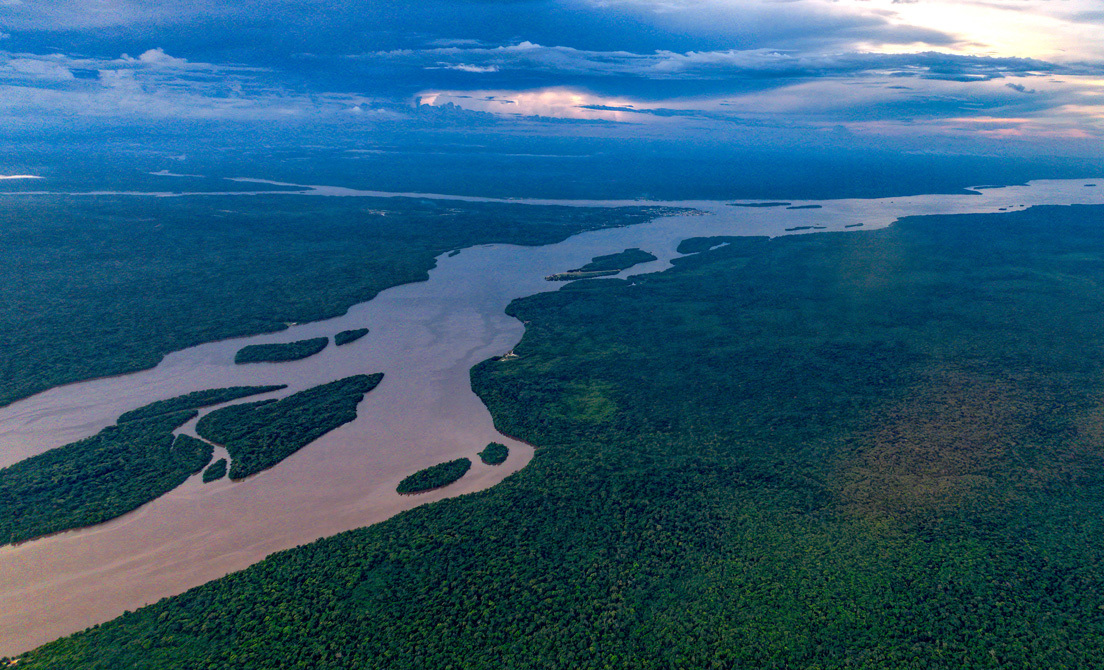
Guyana has increased the number of troops present on its border with Venezuela and signed a maritime security cooperation agreement with the US. Both moves follow a declaration in Caracas by President Nicolás Maduro, again laying claim to the Essequibo region, an area which makes up nearly 60% of Guyana.
Speaking on 7 January to Venezuela’s Councils of State and Defence of the Nation, Maduro said “Guiana Esequiba has always been the territory of Venezuela and suffered imperial dispossession. That territory belongs to the Venezuelans and we are going to reconquer it”.
The decree claimed Venezuelan sovereignty and exclusive sovereign rights over the waters and seabed adjacent to Guyana’s coast, west of the Essequibo River, and the land territory to which it is attached. It also established a ‘strategic zone of national development’ directed and administered ‘by a designated authority’ for the development of ‘the Venezuelan Atlantic coast’.
Responding two days later in an address to the nation, Guyana’s President, Irfaan Ali, rejected the claim. He indicated that Guyana had told Venezuela’s Embassy in Georgetown to convey to Caracas that it “rejects entirely”, in accordance with international law, Venezuela’s assertion of sovereignty. Guyana had also, he said, alerted the international community, including CARICOM and nations across the Americas to the danger the decree posed to international peace and security.
President Ali said that the declaration violated several fundamental principles of international law including well-established rules that “the land dominates the sea” and, therefore, sovereignty and sovereign rights in the sea and seabed “emanate from title to the land”. Consequently, it follows, he said, “that only Guyana can enjoy sovereignty and exclusive sovereign rights over the adjacent sea and seabed”.
He also noted that the issue was before the International Court of Justice (ICJ) and that on 18 December 2020, it had agreed to resolve the matter.
“Guyana is confident that the Court will resolve the issue in its favour, and that this will necessarily also settle the issue of maritime rights in the adjacent sea and seabed …. under international law, this is now for the International Court of Justice to decide,” Guyana’s President said.
In his hour-long televised address to Venezuela’s Council of State, President Maduro also noted that the Venezuelan National Assembly had established a Special Commission for the “defence of the Guyana Esequiba Territory and Territorial Sovereignty”. He said too that he had written to the UN Secretary General asking him to restart negotiations under the auspices of the Geneva Agreement, and had called on the ICJ to request an extension of its hearing until April.
This is a lead article from Caribbean Insight, The Caribbean Council’s flagship fortnightly publication. From The Bahamas to French Guiana, each edition consists of country-by-country analysis of the leading news stories of consequence, distilling business and political developments across the Caribbean into a single must-read publication. Please follow the links on the right-hand side of this page to subscribe, or access a free trial.
[Photo by Johnny Chen]
8 January 2021, Volume 43 Issue 1
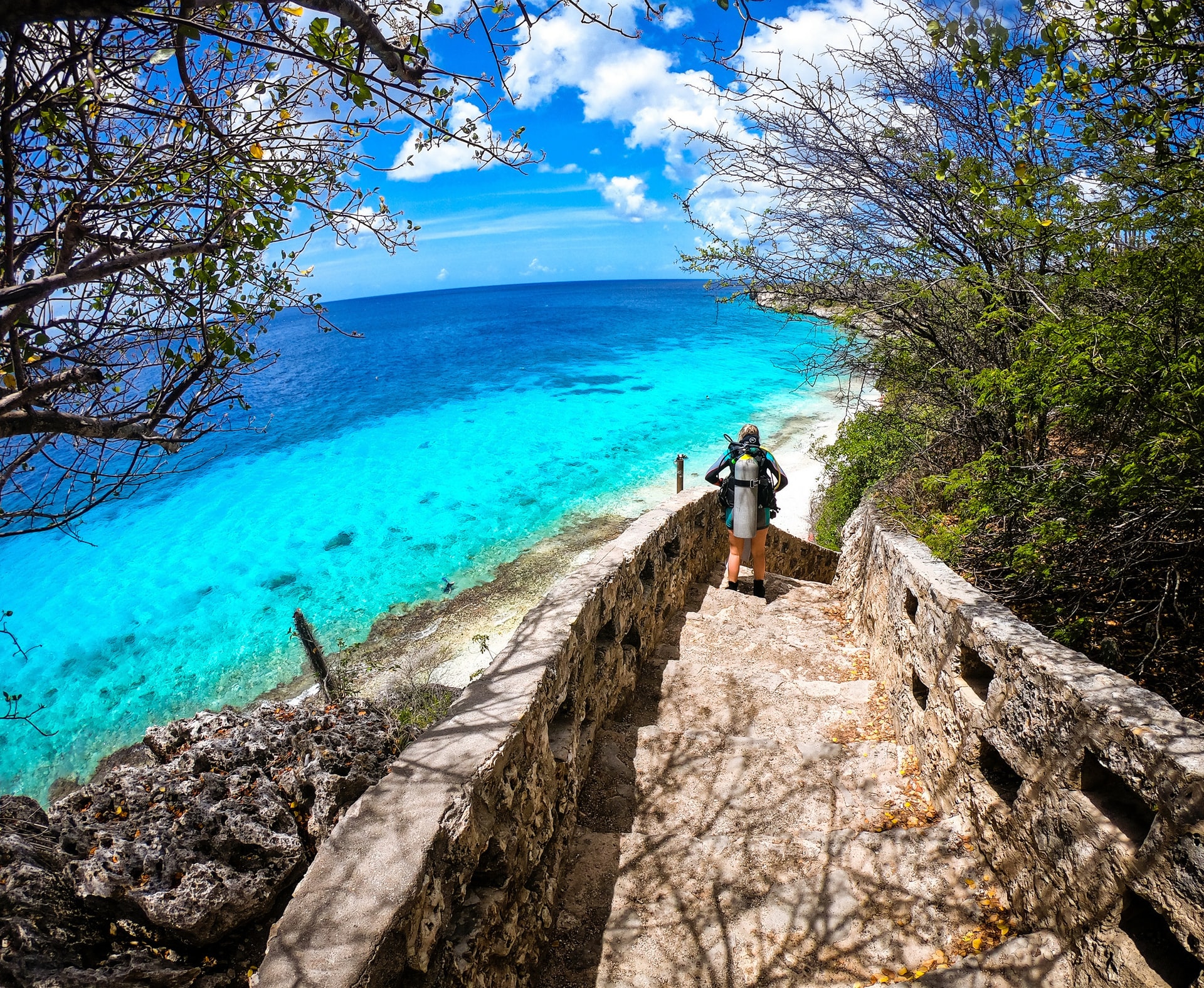
Caribbean tourism professionals have expressed cautious optimism that by the end of 2021 the industry will begin to experience a gradual but full recovery.
Speaking recently to Caribbean Insight, Frank Comito, the outgoing CEO and Director General of the Caribbean Hotel and Tourism Association (CHTA), said that while the industry did not anticipate tourism returning this year to anywhere near what it experienced in terms of arrival numbers prior to COVID-19, there were strong indications of pent-up demand and the redemption of previously cancelled bookings.
Comito believes that the first several months of 2021 will be a challenge but noted that the industry expects to see gradual growth from a presently low base. “The region’s proximity to its main markets in the North America, and the appeal of our outdoor-based product, coupled with vaccine implementation all point to a steady return, likely to really show as we approach mid-year”, he said.
Recent scenario modelling by the UN’s World Tourism Organisation (UNWTO) also suggests the same. The Madrid based body estimates that full recovery to the 31.3m region-wide visitor arrivals recorded in 2019 will occur sometime between mid-2022 and the start of 2024. Estimates suggest that Caribbean visitor arrivals fell by 75% in the final three quarters of 2020 causing overall Caribbean economic growth to contract by 6.2% for the year.
Comito’s view is reflected by Ministers and other industry professionals who emphasise the need for the industry to use the experience gained to end its traditional ‘business as usual’ approach.
Jamaica’s Tourism Minister, Edmund Bartlett, said that while he did not expect the industry to bounce back until 2023 or 2024 based on when he expects air and sealift to have returned fully, he is cautiously optimistic that the island “may see an early significant boost in 2021 if the vaccine is highly successful and becomes readily available”.
Bartlett said that 2020 was a watershed year for the industry in Jamaica with an estimated US$5bn loss in earnings and a 2.3m decline in visitor arrivals. Prior to the appearance of the COVID-19 pandemic, the industry on the island had been forecast to experience a 5.2% plus growth rate over 2019, a record year. However, from March 2020 on, the COVID-19 pandemic triggered a precipitous decline in visitor arrivals with just over 1.1m visitors arriving in the first ten months of 2020 compared with 3.4m over the same period in 2019. 2
Looking forward, Bartlett said that the pandemic had illustrated the need to better diversify the island’s tourism economy away from primary suppliers of visitors such as the US, UK and Canada which were also having to address the economic shock of the pandemic.
This will see in the short and longer term, the country craft a new product built around “inclusiveness, safety, security and seamlessness” he said. In addition, he noted that Jamaica’s tourism will become more “inward looking” with government sustaining in the longer-term recovery strategies that include improved linkages with agriculture and its ‘Rediscover Jamaica’ campaign which encourages Jamaicans to staycation, an approach initially adopted to offset the 2020 shortfall in international visitors. The minister also emphasised that he intends to make the case for tourism workers globally to be considered for early vaccination so that the sector can quickly recover.
In a similar vein, Neil Walters, the Acting Director General of the public sector Caribbean Tourism Organisation (CTO), in a new year’s message, said that although the region for the most part had been able to control the spread of the virus within local populations, the pandemic had crippled the economies of many smaller tourism dependent economies. Based on the experience, the advice of public health experts and the two-year cycle of previous pandemics, CTO he said, hoped that a return to ‘normalcy’ will occur beyond December 2021, but that the measures implemented to control the spread of the virus “may stay with us for an indefinite period”.
Walters, Comito and Bartlett all indicate that the pandemic has offered the opportunity to reassess the role of the sector and its linkages.
Comito says that the pandemic has enabled the creation of new public-private partnerships, has improved industry research and that with the roll out of the vaccine in the region’s major markets, the right assurances of health safety, the continued training of the workforce in conjunction with the Caribbean Public Health Authority (CARPH), and better messaging the industry should recover.
He also believes that the collaboration regionally between CARPHA, CTO and CHTA to build health safety protocols, train, and track with employees and visitors will be the key to creating and communicating the confidence which travellers and those who book travel to the region need.
He, however, cautions that recovery requires the industry’s stakeholders needs to develop responses to the many challenges the sector faces. These, he said, include addressing its vulnerability to economic downturns; developing responses to periodic climatic, political, and public health crises; better managing growth, affordable airlift, and rising costs; addressing revenue leakage and competition from other markets; improving public-private partnerships; rebalancing levels of foreign and local ownership; and doing more to link to local entrepreneurs and small businesses.
What should not happen, he says, is sacrificing the progress the industry has made towards promoting sustainable development or diluting the cultural identity of the Caribbean. As visitor needs and behaviour continues to change, he says, every part of the industry must also adapt by training and empowering staff to accentuate and differentiate Caribbean hospitality, culture, identity, and diversity.
This is a lead article from Caribbean Insight, The Caribbean Council’s flagship fortnightly publication. From The Bahamas to French Guiana, each edition consists of country-by-country analysis of the leading news stories of consequence, distilling business and political developments across the Caribbean into a single must-read publication. Please follow the links on the right-hand side of this page to subscribe, or access a free trial.

The Governments of Guyana and Suriname have launched an unprecedented series of actions intended to more closely integrate their economies and, over time, their commercial links to neighbours in South America.
In a series of recent announcements, visits, and exchanges, the Surinamese President Chandrikapersad Santokhi, and his Guyanese counterpart, Irfaan Ali, have outlined a programme that is expected to lead to regular high level political dialogue, unrestricted connectivity by air, the building of a major bridge and shared deep-water port, the expansion of export agriculture and agro-processing for the Caribbean region, and eventual resolution of the two nations’ border dispute.
A Strategic Dialogue and Cooperation Platform (SDCP) which the two countries have established is expected to also lead to them jointly working with international financial institutions to raise capital; managing the natural resources sector; developing a local content policy; sharing information on security issues; collaborating on border radar surveillance; and developing common approaches to mining, information communications technology, marine piracy, cybersecurity, and training in the oil and gas sector. In addition, health, sustainable development, the promotion of bi-national tourism, joint marketing of goods and agricultural products and closer cooperation on sports and culture are expected to be discussed.
Speaking to Suriname’s National Assembly during a recent visit to mark the country’s 45th Anniversary of Independence, Guyana’s President, Irfaan Ali, said that that the future of the two nations were intertwined.
Observing that Guyana and Suriname both held elections with democratic outcomes in 2020, Ali said that this would enable the two nations to unlock “their latent economic potential and boost investor confidence” and seize the opportunity to dismantle impediments to bilateral trade.
“The future of our economies are intertwined. I believe we should seize this special period, to strengthen our bilateral relations. We have a golden opportunity to begin to dismantle the impediments to bilateral trade ….We should take advantage of both the synergies and complementarities of our economies to deepen economic and social integration”, Ali told Suriname’s legislators.
President Ali went on to says that both nations now have the opportunity to experience accelerated growth and development and to benefit from the exploitation of their natural resources and their agricultural potential. A closer relationship, he said, offered the chance to supply “a great proportion of the food needs of CARICOM”, develop value added agro-processing and eco-tourism, and to expand trade. To this end he said, the Guyana government is developing a plan that would establish a dedicated pathway to deepening economic and social cooperation with “deadlines” and to fully involve the business community.
Speaking about this recently, Albert Ramdin, Suriname’s Minister of Foreign Affairs, International Business, and International Relations, said that the objective would be for the two governments to create an environment in which the private sector can generate jobs and income, and drive sustainable development in both nations.
According to Ramdin and other ministers, thematic working groups have been established within the framework of the SDCP tasked with pursuing realistic action programmes and finding ways to remove obstacles to cross-border trade and transport while curbing illegal cross-border activities.
Concrete decisions already taken include:
• Holding political summits twice a year to simplify and scale up a direct dialogue on issues including the two country’s previously contested border;
• Building a bridge over the Corantijn River as a joint investment by the end of 2025, opening virgin lands and the possibility of large-scale farming on either side;
• Constructing through a public private partnership of a deep-water facility to support huge oil discoveries in the Guyana-Suriname basin;
• Exploring the possibility of a further bridge linking Suriname with French Guiana;
• Using the SDCP as the mechanism through which bilateral discussions will take place; and
• Establishing within it, working groups including one on Foreign Affairs focussed on migration and cross-border traffic, an Infrastructure and Transport working group mainly dealing with the construction of bridges, and others on Oil and Gas, Health, the Environment, Tourism, Culture and Sport, Education, Capacity Building, Business and Agriculture.
In a related development it was announced in early December that an Air Services Agreement between Suriname and Guyana has been signed that is in effect an open skies agreement. Juan Edghill, Guyana’s
Minister of Public Infrastructure, told the media that in future there will be no restrictions on the frequency and capacity of air services and that third country passenger and cargo flights will be able to before.
Also speaking recently, President Santokhi said that he wants to see a bridge built over the Marowijne River to link Suriname to French Guiana. The issue, he said, will be on the agenda when a ministerial delegation holds meetings in Paris. “We are going to open up the entire area and make the three Guyanas, with good negotiation between the governments of these three countries, an area with free movement of people and goods,” he told a meeting in the western district of Wanica, close to the border with French Guiana. The project, he said, has the support of his Guyanese counterpart.
It is also hoped that the outstanding issues relating to the two nations border dispute can be resolved soon. Speaking about the matter to journalists, President Ali has recently said that the border commission continued to work to find a basis for a resolution from which both countries might benefit. The New River Triangle border dispute between Guyana and Suriname dates to 1840 and remains unresolved despite the then colonial powers agreeing in 1936 that the full width of the Corentyne River belonged to Suriname.
In a separate development, the Netherlands Foreign Minister, Stef Blok, has met with Suriname’s President to reset ties that had all but been at a standstill for over a decade because of the former President Desi Bouterse’s convictions on charges relating to narcotics trafficking and the 1982 murder of his political opponents. Blok also met with Guyana’s President when both participated in Suriname’s 45th Anniversary celebrations.
This is a lead article from Caribbean Insight, The Caribbean Council’s flagship fortnightly publication. From The Bahamas to French Guiana, each edition consists of country-by-country analysis of the leading news stories of consequence, distilling business and political developments across the Caribbean into a single must-read publication. Please follow the links on the right-hand side of this page to subscribe, or access a free trial.

The Bahamian umbrella environmental group ‘Our Islands, Our Future’ has said that it will take legal action in relation to a judicial review it is seeking if the Bahamas Petroleum Company’s (BPC) starts a planned offshore drilling programme.
The activist group said that it will seek an injunction if the company does not halt its planned activities pending a judicial review of the environmental authorisation that allowed it to prospect. The company intends beginning operations next month on its Perseverance#1 well on its deep-water Cooper license about 90 miles South West of Andros.
In a recent update to its investors, BPC had noted that it intended spudding an exploratory well within a matter of weeks, completing all related activities prior to mid-April 2021, and expected the arrival of the drill ship, Stena IceMAX, in The Bahamas before the end of the month and work to commence by 15 December.
In the statement the company said that assuming a real US$40 oil price, a “successful development scenario of approximately 0.7bn barrels” meant that “the project remains robustly economic” with proven oil and gas reserves “exceeding US$2.5bn”. It also said that that this could result in “an aggregate revenue stream of over US$5bn” flowing to The Bahamas government in royalty income and other payments over the life of the project”.
BPC noted that it was confident that Perseverance #1, could hold between 0.7bn and 1.4bn barrels of oil adding that it had expanded its operations in Houston, Texas and was using Haliburton to provide logistics planning and drilling services. It also said that it had obtained well control and other insurance policies for the drill site.
‘Our Islands, Our Future’, which brings together several Bahamian activist bodies, argue, however, that the project should be legally halted on the basis that the environmental impact assessment for the project was flawed, and there was a lack of proper consultation. The group, which has substantial local and international support, also expressed concern about the absence of dialogue with the Bahamian government and the failure of the Prime Minister to respond to its letters.
Speaking recently to The Tribune, Casuarina McKinney-Lambert, the Executive Director of the Bahamas Reef Environmental Educational Foundation said that the group believes that the environmental impact assessment was flawed. She was quoted as saying: “We have asked repeatedly to be consulted on the details of the deal, to see the drilling licenses themselves, for access to more information on BPC’s insurance coverage and the environmental sensitivity maps they have supposedly compiled. It seems appealing to the courts is the only way to achieve some transparency”.
In a related development, James Smith, a non-executive director of BPC and former Bahamas Central Bank Governor and Minister of State for Finance, described the action of environmental activists in trying to block legally the company’s offshore hunt for oil and gas as “preposterous”.
Smith was reported by Tribune Business to have said that with “tourism collapsing, and the economy tanking” as a result of COVID-19, there was “even more reason” to allow BPC to proceed with its exploratory well drilling and to determine whether commercial quantities of oil exist of benefit to all Bahamians. Smith went on to observe that the group was singling out BPC when there were daily movements of tankers through Bahamian waters that presented a greater risk of a spill than BPC’s exploratory, non-production well.
If oil is found, BPC say, its preferred development concept would be the use of a subsea wells system tied to a Floating Production Storage Offloading (FPSO) vessel, an approach it argues is based on known technology operated safely across the Atlantic Margin. It also said that it had recently raised US$12m through a share placement with institutional investors.
The action by ‘Our Islands, Our Future’ is the latest in a growing number of challenges brought by environmental groups in French Guiana, Guyana, Suriname, Belize, Barbados and elsewhere. While the majority of such actions relate to the development of onshore and offshore extractive industries, others involve beachfront, ports and other infrastructural development in a region that for the foreseeable future remains highly dependent on tourism and maintaining a pristine environment.
In Jamaica, in recent weeks, the Holness administration has been accused by activists of trading short-term gain for long-term degradation by overturning a permit denied by Jamaica’s environmental agencies for mining and quarrying in the Dry Harbour Mountains. The decision will see the establishments of a limestone quarry in an ecologically sensitive area by Bengal Development/Jamaica World LLC. Although it is expected to earn Government more than J$635m (US$4.3m) in taxes, an environmental impact assessment outlined multiple destructive consequences that would result from mining and quarrying.
The findings, which government set aside, concluded that the proposed development was contrary to the provisions of the St Ann Confirmed Development Order 2000; that the area was not designated as a quarry zone; and that the nature and scale of operations would threaten biodiversity and undermine watersheds.
This is a lead article from Caribbean Insight, The Caribbean Council’s flagship fortnightly publication. From The Bahamas to French Guiana, each edition consists of country-by-country analysis of the leading news stories of consequence, distilling business and political developments across the Caribbean into a single must-read publication. Please follow the links on the right-hand side of this page to subscribe, or access a free trial.