Caribbean Insight
The Caribbean Council's Flagship Fortnightly Publication
Caribbean Insight is The Caribbean Council’s flagship fortnightly publication. Our comprehensive publication offers the latest in news, analysing business and political developments across the region.
From The Bahamas to French Guiana, each edition consists of a country-by-country analysis of the leading news stories of consequence, distilling developments across the Caribbean into a single must-read publication. Each edition contains two leading articles providing in-depth analysis of topical political, economic and developmental issues in the region.
Don’t miss out on the latest news business and opportunities from the region. Subscribe to receive the Caribbean Insight Publication directly to your inbox. Caribbean Insight Subscribers receive 23 editions over 12 months. Click to Subscribe.
Interested in seeing a sample edition of Caribbean Insight? Follow the link.
Lead Articles Featured on Caribbean Insight
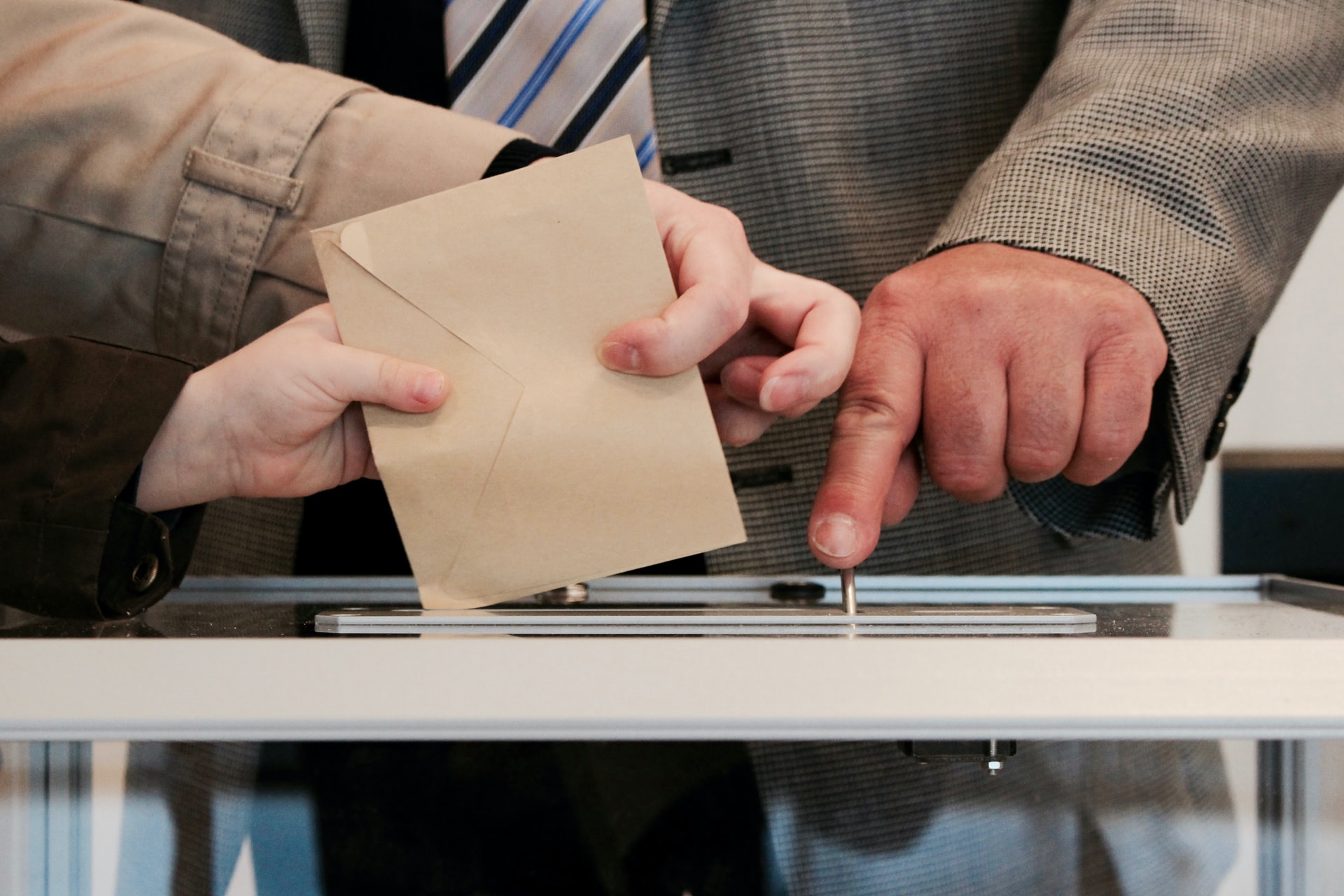
Photo by Arnaud Jaegers
The opposition St Lucia Labour Party (SLP) has won a landslide victory in the country’s 26 July General Election. The new Prime Minister is Phillip Pierre.
The SLP secured 13 of the 17 parliamentary constituencies, while the incumbent United Workers Party (UWP) led by Former Prime Minister Allen Chastanet retained only two seats, those of Chastanet and former Commerce Minister Bradley Felix.
In a what was a controversial decision, the SLP opted to field candidates in only 15 constituencies; excluding the two constituencies where former UWP members Stephenson King and Richard Frederick campaigned and were successfully elected as independents. Outgoing Prime Minister Allen Chastanet said the results of the election came as a “shock”.
“This is the start of a new beginning,” declared Pierre during the swearing-in ceremony. The task ahead will not be easy, but together with my team of able and experienced men and women we will deliver to the people of St Lucia,” the new Prime Minister said.
Pierre, who previously served as Deputy Prime Minister in the last SLP Administration, asked for patience as the government seeks to “assess the state of the country’s financing and capacity to deliver early as possible, the commitments made to the people of St Lucia”.
The SLP campaigned on the promise of social and economic inclusion and anti-corruption. Major proposals included the exemption of workers earning up to US$1,480 per month from paying income tax, completion of the long-awaited St Jude Hospital, the establishment of a sovereign wealth fund, and the removal of school and Caribbean Examination Council (CXC) examination fees. The political manifesto also included the significant expansion of the tourism sector through key initiatives to increase hotel room stock and improve the performance of the cruise and yachting industry.
“The only way of restoring our nation to economic and financial stability is to develop the economy by facilitating job creation in the private sector, placing more money in the hands of workers and strengthening the capacity of the revenue collection agencies of the government,” Pierre said.
On the foreign policy front, the SLP Administration proposed the establishment of economic diplomacy with non-traditional countries in order to encourage increased foreign direct investment, and to strengthen relations with the French Caribbean.
Regional leaders have sent messages of congratulations to Mr Pierre. In a letter, Antiguan Prime Minister and CARICOM Chairman, Gaston Browne congratulated the newly appointed Prime Minister and noted that he is looking forward to work with him.
“The people of St Lucia have entrusted you to lend your voice to the discussion and policies that govern the region through an institution such as the organization of the Eastern Caribbean States (OECS) and the CARICOM,” Browne wrote.
Calling the election results a “stunning victory”, Vincentian Prime Minister Ralph Gonsalves pledged that his country would continue working with the Government and people of St. Lucia on matters of development.
For his part, Former Prime Minister Chastanet said that he called Prime Minister Pierre “to congratulate him and wish him the best”. Chastanet thanked those who supported the UWP in the election and over the last five years. “We have stayed focused and strong… It was truly a privilege to serve you as Prime Minister,” the presumed Opposition Leader said.
On 5 August the SLP Cabinet of Ministers took the oath of office. Notable portfolios include Prime Minister Pierre as Minister of Finance, Economic Development and the Youth Economy, Moses Jn. Baptise as Health Minister, and Ernest Hilaire as Tourism Minister. In a surprise move, independent MP and former UWP minister, Stephenson King was sworn in as Minister of Infrastructure, Ports and Transport.
This is a lead article from Caribbean Insight, The Caribbean Council’s flagship fortnightly publication. From The Bahamas to French Guiana, each edition consists of country-by-country analysis of the leading news stories of consequence, distilling business and political developments across the Caribbean into a single must-read publication. Please follow the links on the right-hand side of this page to subscribe, or access a free trial.

Photo by Patrice S Dorsainville
Ariel Henry has been sworn in as Haiti’s new prime minister following the resignation of Claude Joseph, as interim Prime Minister. Joseph, who had assumed the leadership of the country after the assassination of the country’s President, Jovenel Moïse, had lost the support of the International Community. (Caribbean Insight 10 July 2021).
According to reports, in recent days the informal group of ambassadors and foreign envoys known as the “Core Group” which includes Germany, Brazil, Canada, Spain, the US, France, EU, UN and the OAS had withdrawn their support for Joseph who had been appointed by Moïse before his death.
In a statement, the group spoke to the need for a “consensual and inclusive government” to be put in place by “the designated Prime Minister Ariel Henry to continue the mission entrusted to him to form such a government”.
There had been an ongoing political tussle between the two since President Moïse’s assassination. Although Moïse had chosen Henry to replace Joseph as interim prime minister, he was killed before he could see him sworn in.
At one stage, it appeared that the Core Group would support Joseph after Helen La Lime, the Special Representative of the Secretary General of the UN and Head of the UN Integrated Office in Haiti (BINUH), told the UN Security Council that he should continue as leader until elections are held. However, “Joseph’s fate was sealed over the weekend,” Robert Fatton, a US-based Haitian politics expert told The Associated Press. “Everything that happens in Haiti has a powerful foreign component.”
Both men shared a stage as Henry and his 18-member cabinet were sworn in on 20 July. “It is in the context of extreme polarisation… that we must find and implement a lasting solution to the multifaceted crisis with which we are confronted,” Henry said at the ceremony. “You’re inheriting an exceptional situation characterised by the absence of a president to serve as your shield, a political crisis unprecedented in the history of the country, galloping insecurity, a morose and precarious economic situation,” Joseph cautioned as he returned to his former role as foreign minister.
There have been mixed reactions to Prime Minister Henry’s appointment both in Haiti and abroad. Aljazeera reported that a main opposition coalition known as the Democratic and Popular Sector called Henry a puppet of the international community and rejected his appointment. “This step is only a political provocation that will add fuel to the fire and push the country further into crisis,” it said.
Lawyer Caleb Jean Baptiste, who runs a human rights legal group, rejected the CORE group’s involvement. “The CORE group is not Dessalines, it is not Henry Christophe, it is not Haitian, they are interfering in our country, they are violating the OAS charter, they are violating all the agreements that we have signed and ratified, the CORE group does not have the right to do that,” he told VOA.
Meanwhile, as investigations into the attack continue, Haitian police chief Léon Charles announced four more formal arrests, including at least three police officers, whose ranks he did not release according to Aljazeera. “There was infiltration in the police,” said Charles, without providing additional details.
To date, over two dozen people have been detained in connection with the killing. According to reports, two Americans arrested have told a Haitian judge that they were not in the room when the President was killed and that they were involved only as translators. During their interview with the judge, they admitted to meeting with other participants at a hotel in the Pétionville suburb of Port-au-Prince, to plan the attack. They also said that the goal was not to kill the President, but rather to bring him to the national palace.
Christian Emmanuel Sanon, a Haitian-born doctor based in Florida has also been arrested. At a news conference, police chief Charles suggested that he believed Sanon was plotting to become president. “He arrived by private plane in June with political objectives and contacted a private security firm to recruit the people who committed this act,” said Charles.
Reports had also emerged that Police Chief Charles has himself been implicated, along with former interim Prime Minister Claude Joseph. However, authorities have vehemently denied that current government officials are involved. “The police warn of all propaganda creating a diversion,” Charles said, adding that the government has no evidence to support such accusations.
Joseph had made requests for foreign intervention to help stabilise the nation, including calling on the UN and US to send troops. However, the UN Security Council would have to approve the entry of a multinational UN force into Haiti. President Joe Biden has said that he is not in favour of US military involvement in Haiti, but that he would deploy troops to fortify the US Embassy in Port-au-Prince.
Biden recently received a briefing from a special US delegation which was dispatched a to Haiti to assist with the investigation. The delegation included FBI, Department of Homeland Security, State Department and National Security Council officials. In an indication of US concern about the consequences of further unrest in Haiti, the US Homeland Security Secretary, Alejandro Mayorkas issued a strong warning to Haitians against trying to enter the US. “I repeat: do not risk your life attempting to enter the US illegally. You will not come to the US,” he said in remarks.
Meanwhile, the Dominican Republic has called on the international community to contribute as much as possible to the creation of a favourable environment for internal dialogue in Haiti. In a press note, the Ministry of Foreign Relations said, “it adheres to the principle of non-intervention in the internal affairs of other states and respect for the Inter-American Democratic Charter, especially with regard to the participation of citizens in decisions concerning their own future”. The Ministry also affirmed its commitment to the promotion of good neighbourliness and mutual co-operation with Haiti.
The statement came as the government ordered that merchandise exports be restarted across the countries’ borders, having ordered them shut after the attack. A press release from the Presidency indicated that “the decision seeks to maintain the supply of the Haitian commercial system at the levels required to reduce the possibility of a general shortage that produces social instability and migratory flows.”
Private sector leaders in the Dominican Republic had issued calls for trade to be restarted after significant lost revenue and spoilage. Executive vice-president of the Association of Industries of the Dominican Republic (AIRD), Circe Almánzar cautioned that “the commercial exchange must be re-established in a safe way, without affecting our citizens or our companies.”
President Moïse’s funeral will be held on 23 July. First Lady Martine Moise who was shot during his assassination, recently returned from the US where she was being treated for her injuries. The First Lady’s direct-witness testimony is expected to be pivotal in the ongoing investigation.
This is a lead article from Caribbean Insight, The Caribbean Council’s flagship fortnightly publication. From The Bahamas to French Guiana, each edition consists of country-by-country analysis of the leading news stories of consequence, distilling business and political developments across the Caribbean into a single must-read publication. Please follow the links on the right-hand side of this page to subscribe, or access a free trial.

Photo by BBC News
President Jovenel Moïse was assassinated at his private residence in Port-au-Prince, after it was stormed by armed men in the early hours of 7 July.
The President was reportedly shot 12 times, and succumbed to his injuries at the residence, which was heavily vandalised. First Lady Martine Moïse was also injured in the attack and remains in serious condition after she was transferred to Miami for treatment. Officials say that their three children are in a “safe location.”
Reports have emerged of men dressed in black carrying high-powered weapons speaking in Spanish and English, who may have pretended to be members of the US Drug Enforcement Administration. Videos purporting to be of the attack have also been circulating on the internet. Haiti’s ambassador to the US, Bocchit Edmond, said that the DEA link was likely a ruse to create confusion as the attack unfolded.
Assuming control of the country, Interim Prime Minister Claude Joseph called the killing a “heinous, inhuman and barbaric act,” and said that “all measures had been taken to guarantee the continuity of the state.” In an address to the nation on the National Television of Haiti (TNH), Joseph declared a country-wide state of siege under article 149 of the constitution. The order allows police and security forces to enter homes, control traffic and bancertain gatherings; measures Joseph says will “permit the arrest of the assassins.”
However, there are some questions about Joseph’s legitimacy, given that President Moïse had named a new Prime Minister,Ariel Henry, only days earlier, though he had yet to be sworn. According to reports, the constitution says the President of the Supreme Court should take over in the event of a presidential vacancy, but with that position also vacant, amendments suggest the Prime Minister should assume control. The UN Special Envoy for Haiti, Helen La Lime, has said that Joseph should lead the country until elections are held.
Within a day of the assassination, the Interim Chief of Haiti’s National Police, León Charles, announced that an operation had resulted in four of the suspected assassins being killed during a gun fight, while six others were arrested. Three police officers being held as hostages were also freed. “We have the physical perpetrators in hand, and we are looking for the instigators,” Charles said at a press briefing.
At the time of writing, 17 suspects have been arrested, and three have been killed in confrontations with police, while eight more remain at large. Of the 28 alleged assassins, Charles has identified 26 as Colombians and 2 as Haitians with US citizenship. According to the BBC, the government of Colombia has confirmed that “at least six of the suspects appeared to be retired members of its military.” The US Department of State has yet to authenticate the citizenship of the 2 Haitian-Americans in question. US and Canadian media reports name one of the US nationals as James Solanges, who briefly served as a privately-contracted “reserve bodyguard” at the Canadian Embassy in Port-au-Prince. Global Affairs Canada, the country’s foreign relations ministry, confirmed the reports, without mentioning Solages by name.
Meanwhile, Dominican Republic President Luis Abinader has ordered the border between the countries be closed and the military to launch “Operation Gabion” to coordinate emergency actions,to prevent the exodus of Haitians to Dominican territory and possible disturbances due to the fall-out from the assassination. According to the Colombian newspaper, El Tiempo, four of the Colombian suspects flew from Colombia to the Dominican Republic on 4 June, and then crossed overland into Haiti on 6 June.
World leaders have reacted to news of the assassination with widespread condemnation. Through its Foreign Minister, Jean Yves Le Drian, France (which has had a chequered relationship with Haiti dating back to its independence) condemned the “cowardly assassination.” “All light must be cast on this crime that took place in a deteriorating political and security climate. I call on all actors in Haitian political life for calm and restraint,” Le Drian said in a statement.
President Joe Biden said that the US is “shocked and saddened by the horrible assassination of President Jovenel Moïse and the attack on the First Lady, Martine Moïse, of Haiti.” In a CNN appearance, White House Press Secretary Jen Psaki said that, “The message to the people of Haiti is this is a tragedy, it’s a horrific crime, and we’re so sorry for the loss that they are all suffering and going through as many of them are waking up this morning and hearing this news.” She later reiterated the US’ desire for elections to be held in 2021 as planned.
“I am shocked and saddened to learn of the death of President Moïse. Sincere condolences to her family and to the Haitian people. It is a heinous act, and I call for calm at this time,” UK Prime Minister Boris Johnson said in a statement.
In the Caribbean, Heads of Government of CARICOM met in an emergency caucus to discuss the bloc’s response. Current Chairman, Prime Minister Gaston Browne of Antigua and Barbuda, condemned the attack on behalf of the sub-region. “CARICOM will continue to work in close cooperation with the Haitian people, the United Nations, the Organisation of American States, and the governments of France and the United States, in bringing a reasonable settlement of the state of uncertainty and instability that now threaten the peace and security in Haiti and our Community as a whole,” he said in a statement.
Moïse had been in power since February 2017, after his predecessor, Michel Martelly, stepped down. His time in office was tainted by allegations of corruption and constitutional challenges about when his term should end. The opposition said that the five-year term should have ended on 7 February 2021, five years to the day of his taking office, but Moïse argued that he had one more year to serve. He continued to rule by decree, despite widespread objections. The country had been in a state of acute unrest for several months, with often-violent anti-government protests and gang wars becoming commonplace.
This is a lead article from Caribbean Insight, The Caribbean Council’s flagship fortnightly publication. From The Bahamas to French Guiana, each edition consists of country-by-country analysis of the leading news stories of consequence, distilling business and political developments across the Caribbean into a single must-read publication. Please follow the links on the right-hand side of this page to subscribe, or access a free trial.

Photo by iAko Randrianarivelo
Tourism-dependent countries in the Caribbean have been set back by as much as 20 years as a result of the ongoing coronavirus pandemic, according to Barbados’ Prime Minister, Mia Mottley.
Speaking at an IMF forum on Natural Disasters and Climate Change Mottley called for recognition of the plight of tourism-dependent nations and for such vulnerabilities to be written into agreements between small island developing states and lenders.
“The only countries that have been worse hit than us last year are war-torn countries. Our declines have been double-digit in most instances in the Eastern Caribbean; they hover around 18/19%. So, this thing has reversed us at least by a decade in nominal terms, but more like two decades in terms of real losses” the Prime Minister said. IMF Managing Director, Kristalina Georgieva, also acknowledged that tourism-dependent countries have been among the hardest hit by the pandemic.
In her remarks, Prime Minister Mottley pushed back against the notion that the G7 pledge to provide 1bn vaccines to lower income countries by the year’s end could rescue tourism and travel-dependent countries. She noted that countries “have to open back up their economies because they face either economic implosion if they keep their borders closed, or literally the virus running rampant and causing too many people to die on our shores.” In a reflection of this, Trinidad and Tobago’s Prime Minister, Keith Rowley, recently announced that his country’s borders which have remained closed since the start of the pandemic will reopen in July.
Referring to the limited success of the G20-led Debt Service Suspension Initiative, Mottley said that the presence of a pandemic-specific debt relief clause could have limited Barbados’ debt ratio which had fallen from 177% to 118% pre-Covid but has now increased to 152%, not primarily because of increased borrowing, but the contraction of the economy.
Confirming international concern about growing indebtedness because of the pandemic, UN Secretary-General António Guterres has called for debt relief extension for Caribbean and other middle-income countries. Speaking at a UN General Assembly meeting, Guterres said that the more than 100 middle-income countries which account for over half of the UN’s 193 member-states should have their debts suspended into 2022 to cope with the social and economic impact of the virus. “In small island states, for example, the collapse of tourism has greatly hindered their capacity to repay debts,” he said. “And while the global response to the debt crisis is rightly attempting to support low-income countries, middle-income countries must not be left behind.”
Guterres warned that “even if these countries manage to avoid default, they will see long-lasting limitations on critical government spending on a variety of development and climate objectives in the years to come.” “This is the moment to tackle long-standing weaknesses in the international debt architecture, from lack of agreed principles to restructurings that provide too little relief, too late” he declared.
While some of countries are already experiencing an improvement in tourism as the global vaccine rollout continues, the short-term future remains unclear. Arrival statistics from Tourism Analytics show that while countries like The Bahamas, Aruba, and Antigua and Barbuda have been on the mend in recent months, they are nowhere close to 2019 levels.
Confirming this, a new study by World Travel and Tourism Council (WTTC) and Oxford Economics has found that travel and tourism sector’s contribution to the Caribbean’s GDP fell by 58% (US$33.9bn) in 2020, moving from US$58.4bn (14.1%) in 2019, to $24.5bn (6.4%). They estimate that over 680,000 jobs (24.7%) were lost across the region’s travel and tourism sector which fell from nearly 2.76mn in 2019, to 2.08mn in 2020.
There remains uncertainty about the science surrounding the different vaccines and their effectiveness against new and emerging variants of the virus. These factors, as well as their general availability to the region, puts the idea of a tourism-led economic recovery in a precarious position. The implication is that small states globally will require all the help that international institutions and more developed nations can muster, if they are to emerge from the pandemic without a lost decade, or two.
This is a lead article from Caribbean Insight, The Caribbean Council’s flagship fortnightly publication. From The Bahamas to French Guiana, each edition consists of country-by-country analysis of the leading news stories of consequence, distilling business and political developments across the Caribbean into a single must-read publication. Please follow the links on the right-hand side of this page to subscribe, or access a free trial.

Photo by Raphael Nogueira
In a Twitter Spaces regional dialogue hosted by Kev Politics, Antigua’s Prime Minister Gaston Browne has conceded that high travel taxes are negatively impacting intra-regional travel.
Challenged to address the issue, Browne signalled his intention to lobby his regional counterparts to operationalise a reduction in air travel taxes. The Prime Minister, who is slated to assume Chairmanship of CARICOM in July, asserted that the travel ‘pause’ occasioned by the pandemic provides an opportunity to experiment with lower travel taxes. With regional travel being minimal and little to no revenue being collected from travel taxes, the Prime Minister expressed the view that there was not much to lose if taxes were reduced by as much as 50%.
Defending the lack of progress in the past, he revealed that much of the tax revenue was tied to loan repayments. “At the time it represented a challenge, even for Antigua and Barbuda, because our travel taxes for example were securing a loan of US$94mn that was actually incurred by the former administration. So, to cut by 50 percent would have been difficult, even though we were looking at the possibility of even reducing the travel taxes by about 25 percent at the time” the Prime Minister said.
For the Caribbean, one of the sectors most impacted by the COVID-19 pandemic has been travel. The International Air Transport Association (IATA) called 2020 the worst year in the history of travel demand, with revenue passenger kilometres (RPKs) declining by 65.9% compared to 2019. Even before the advent of the pandemic, the issue of Taxes, Fees and Charges (TFCs) in air transport has been a source of controversy globally, not least in the Caribbean.
While the region is heavily dependent on air transport to support the tourism industry, several studies have found that high and increasing TFCs have contributed to the decline in intra-regional travel in the run-up to its collapse in early 2020. As a consequence, there have been repeated calls for regional leaders to slash taxes in order to reverse the trend of declining regional travel and business.
Analysis in 2016 revealed that on average, TFCs added 54% (40% from taxes and 14% from charges) to the cost of intra-regional travel. This is believed to have increased since then. While the Prime Minister cautioned that it would be difficult to effectively gauge the response (elasticity) to tax reductions, numerous studies, including a report from the Caribbean Development Bank, have used price elasticity of demand to predict that if governments were to reduce TFCs, intra-regional Caribbean travel would increase significantly.
In committing to take the issue before his own Cabinet in Antigua and Barbuda, the Prime Minister predicted that cheaper travel could be a way to incentivise fully vaccinated persons to take to the skies once again, provided that a new regional travel bubble is set up.
“I can tell you that my colleagues are looking at it seriously and I believe that we should be able to convince them to do something now. It could even be for a temporary period, if we say that we do it between now and the end of the year” Browne was quoted as saying by the Antigua Observer.
With similar public commitments made by regional leaders in the past, it remains to be seen, however, if lower travel taxes will become the reality in a region saddled with growing public debt.
This is a lead article from Caribbean Insight, The Caribbean Council’s flagship fortnightly publication. From The Bahamas to French Guiana, each edition consists of country-by-country analysis of the leading news stories of consequence, distilling business and political developments across the Caribbean into a single must-read publication. Please follow the links on the right-hand side of this page to subscribe, or access a free trial.
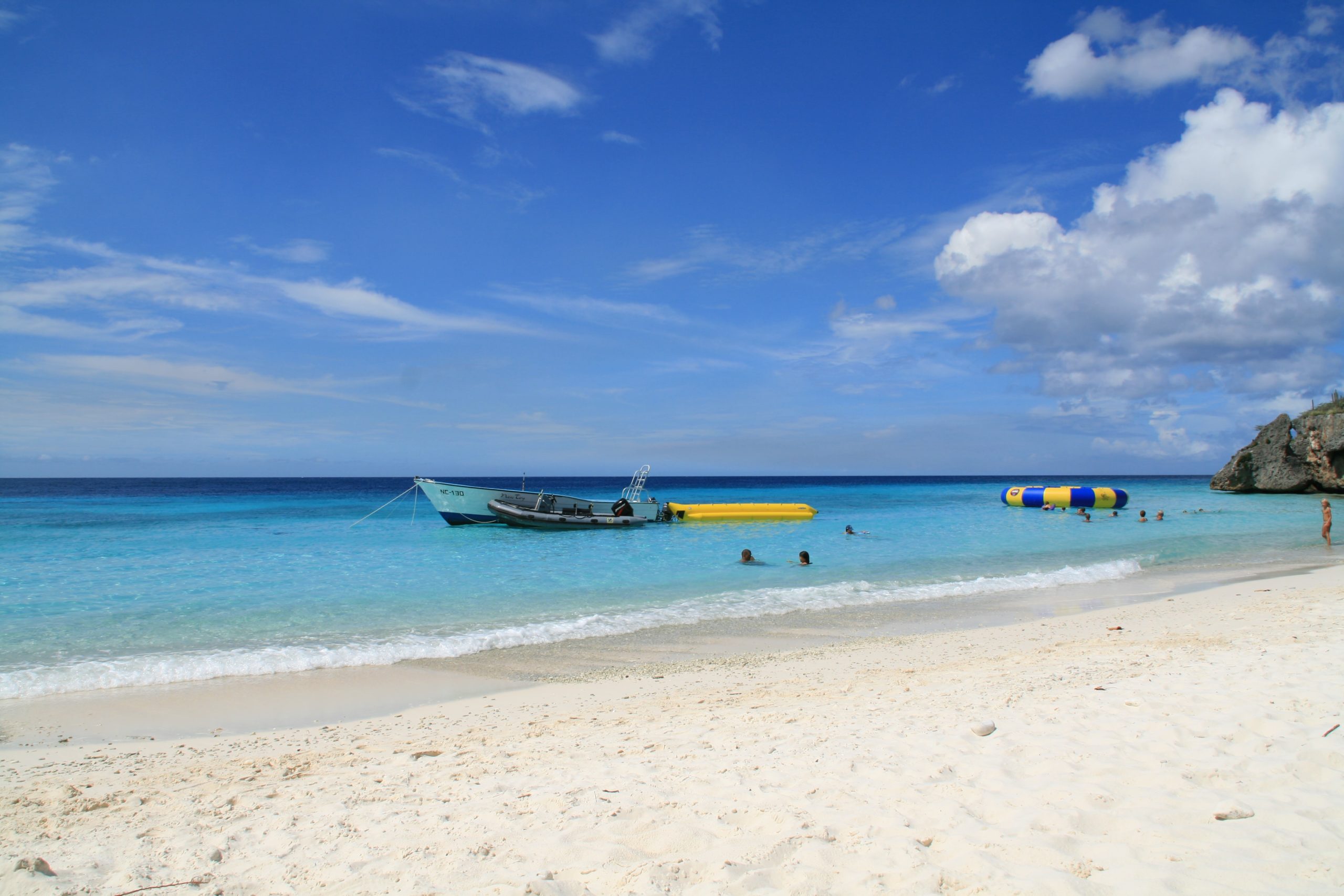
Photo by Lucas Swennen
A study published by the Inter-American Development Bank (IDB) suggests that for Caribbean tourism to fully recover from the pandemic it will need to innovate and adapt its product to meet changing global demand.
Speaking about the report, ‘Imagining a Post-COVID Tourism Recovery: A Regional Overview’, Olga Gómez, the IDB’s lead tourism specialist said that it is no longer enough to depend on the lure of beaches. “Tourism destinations need to invest in improving their competitiveness, aligning their tourism products to the broader local and global economic trends, and exploring new and traditional emerging market segments”.
The report suggests that public and private sector policy and investment agendas should give greater priority to the changing preference of travellers for nature-based tourism and experience related travel, observing that this makes it more important that the region protects its natural assets, environmental sustainability, and adapts to climate change.
The report also updates IDB’s comprehensive Tourism Dependency Index, observing that of the world’s 15 most tourism dependent economies, eight are in the Caribbean, led by Aruba (ranked first in the world, with a score of 80 out of a possible 100 on the index) with The Bahamas (6th), Barbados (11th), and Jamaica (13th) now joining the list. The others are Grenada (4th); Antigua (5th); St Lucia (7th); Dominica (9th); with Belize in 15th position.
The regional overview considers the key drivers of tourism demand in the short term, including the evolution of the pandemic, the COVID-19 vaccination roll-out both in the region and in its principal visitor markets, the economic environment in source countries, the split between business versus leisure tourism, and airline capacity, among the factors affecting recovery.
Concluding that it is unlikely that a ‘V-shaped’ tourism recovery will occur, IDB suggests that the most likely scenario is a recovery timeframe between 2.5 to 4 years to return to pre-COVID-19 levels of tourism arrivals and expenditure. It suggests however that the Caribbean could either lead or lag global recovery, depending upon the specific circumstances in the region’s main source markets and in Caribbean destinations themselves. This, it suggests, will see volatility persist in the Caribbean’s path to recovery and it is likely that affected firms and workers will need continuing support.
The report recommends as several responses. These include:
• A common approach to visitor safety strategies and coordination to ensure a common approach and a common brand for safe Caribbean destinations.
• Broadening market intelligence beyond the use of traditional statistics to include analysis of realtime travel bookings, tourism expenditure data and consumer sentiment surveys.
• Adjusting the tourism product to new consumer preferences if Caribbean destinations are to fully participate in an eventual global tourism recovery; the subject it notes of future IDB research.
• Prioritising accessibility for the destination’s main target markets, based on thorough market intelligence analysis.
• A greater emphasis on the preservation of natural, cultural, and heritage attractions as ‘an essential element to improve tourism competitiveness’, and a focus on high levels of traveller interest in ecotourism and ‘global nomadism’ among millennials.
• The development in the medium to long term of new tourism products to match evolving global tourism demand, including a greater emphasis on eco-tourism, cultural tourism, remote working tourism, educational tourism, and retirement tourism, in the latter case linked to well-being and medical tourism.
IDB also place emphasis on other changes it believes are necessary to ensure that Caribbean tourism fully recovers and remains competitive, including improved supply chain efficiencies, better destination management, and the recognition that the adoption of communication and information technologies are not optional but ‘an immediate necessity’.
Unusually, IDB also looks at business travel in relation to the Caribbean. It says that compared with the worldwide corporate travel average of 22% of all visits made, in the six Caribbean countries that the IDB surveys -The Bahamas, Barbados, Guyana, Jamaica, Suriname, Trinidad – the comparable figure was 19% ranging from 11% in The Bahamas to 36% in Suriname.
It notes that newly adopted teleworking practices have permitted most companies to considerably reduce their operating costs, and that business travel seen globally and in the Caribbean may be maintained. It also suggests that leisure and business travel decisions my also respond to increased awareness of the impact of travel on climate change.
More positively for the sector, it notes that the pandemic has created a new niche demand segment, the ‘digital nomad’ and the development by Barbados and other Caribbean nations of programmes allowing the temporary longer-term migration of professionals able to telecommute. It concludes, however, that international business travel will take longer to rebound than leisure travel, but it remains uncertain which business travel segments will be affected.
The 20-page report including its analysis of the main drivers of Caribbean and global tourism recovery
and extensive related tables and statistics can be accessed at the start of the IDB’s quarterly Caribbean
economic bulletin :
Issue-1-May-2021.pdf
This is a lead article from Caribbean Insight, The Caribbean Council’s flagship fortnightly publication. From The Bahamas to French Guiana, each edition consists of country-by-country analysis of the leading news stories of consequence, distilling business and political developments across the Caribbean into a single must-read publication. Please follow the links on the right-hand side of this page to subscribe, or access a free trial.

Photo by Ryo Yoshitake
Guyana’s President, Dr Irfaan Ali, has said that the country is interested in encouraging large scale investments in food production for export, particularly to CARICOM. Speaking to about 150 potential US investors, he said that the development of the sector and the country’s extensive tracts of productive land was a priority of Government and that it will actively encourage foreign investment in agricultural diversification.
Ali told participants in a webinar organised by the US Department of Commerce that the country was seeking “mega investments” in agriculture. These would be to produce rice, sugar, corn, soya, coconut, spices, and fruits and vegetables, as well as in agro-processing, agrochemicals, the livestock sector, and aquaculture.
Pointing to Guyana’s export potential within CARICOM, he said, by example, that with the right investments Guyana had, the potential to replace the 90% of poultry products worth US$25m that the regional body’s member states presently import.
“Guyana has the potential of satisfying all of CARICOM’s food requirement for poultry products, eggs, beef, aquaculture; we have the land, we have the freshwater but what we don’t have is the investment. What we don’t have are the large-scale megafarms that would allow us to produce, that would allow us to facilitate the type of type of growth that will help us to enter this natural market in CARICOM”, he said.
Continuing, Dr Ali indicated that Guyana would support the creation of the critical infrastructure to enable the future movement of produce from the field to the market or to an export facility. Guyana believed, he said “inherently in the participation of the private sector” in the country’s future growth and development.
Speaking about aquaculture sector, Guyana’s President noted opportunities to develop the CARICOM, US, Mexican and EU markets. There were opportunities, he said, for the local private sector and US investors to develop US market which presently imports over 0.5m tonnes of frozen shrimp and prawns.
Addressing potential investors questions on energy and the cost of electricity, he said that over the medium to long term Guyana would develop an energy mix that will include natural gas, solar and wind and make use of a new energy corridor between Guyana, Brazil and Suriname causing a reduction in costs.
At present agriculture contributes 21.7% of Guyana’s non-oil GDP and exports, provides for about US$370m through exports of traditional agricultural products – rice, fish and, sugar – and a small amount of non-traditional produce. The sector presently employs about 12.1% of the country’s workforce and meets 59% of internal demand.
The Caribbean Council is able to provide further detail about all of the stories in Caribbean Insight. If you would like a more detailed insight into any of the content of today’s issue, please get in touch.

Photo by Pat Whelen
Jamaica’s Finance Minister, Dr Nigel Clarke, has said that if it is to escape from being drawn into a looming regional debt crisis the country must do more to create public-private partnerships.
Speaking at a Private Sector Organisation of Jamaica (PSOJ) virtual forum on post pandemic recovery, the Minister said that the country must seek to differentiate itself from those in the region and elsewhere that may be caught in the looming debt crisis. It should do so, he said, through the maintenance of fiscal discipline and spurring growth through private sector initiatives.
Clarke told participants that Jamaica remained among the most heavily indebted countries in the Western Hemisphere, even after it had manged to bring its debt to GDP ratio down to 94%. “We cannot afford to be mixed up with the group of countries that are going to find themselves in crisis – and many of them are going to have debt levels that are similar to ours,” Clarke said.
Suggesting that an emerging-market debt crisis in the region may not be far away, the Minister warned that Jamaica runs the risk of contagion. The danger is that lenders will “put it in the same box as other peer countries in economic trouble”. The country, he said, only enjoyed the relative safety of having its debt traded on favourable terms because the market believes it remained serious about executing its economic programme with fiscal discipline.
Noting that the Government’s ability to create growth was constrained by limited resources, he went on to say that the best recovery model for Jamaica to pursue was private sector-led growth where efforts are complemented by government resources through public-private partnerships and privatisations that can absorb private capital.
In his remarks he emphasised that the alternative of loosening fiscal rules, or even once again asking the Jamaican financial market to take a hit as it had years before under two debt exchanges, was he emphasised “not on the cards”.
“Having had two debt restructurings in the last decade, we cannot, under any circumstances, afford a third. It would be disastrous. We would be the new Argentina,” Clarke warned.
The Minister’s warnings follow comments he made last month during the 2021/2022 budget debate. Speaking then, he said that Government was pushing for the swiftest and strongest post pandemic economic recovery though disciplined policy choices, maintaining a keen awareness of risk, and by modernising the economy.
In his presentation, Dr Clarke observed that the pandemic had resulted in a “staggering set of numbers” that showed a 12% contraction in growth, the decimation of the tourism sector with tourism revenue projected to drop by 74% or US$2.5bn “setting foreign exchange inflows back by 30 years”.
Although the risk of a downgrade still hangs over the country, Clarke assured Parliament that Jamaica would be able to maintain its international credit rating. Nominal debt remained flat, and the current account deficit was well within safe margins having only deteriorated from 1.6 to 1.7%, he said. He also noted that despite the worst economic crisis the country has seen in almost 80 years, the construction sector remained buoyant, and there had been a record number of new company and business registrations.
Jamaica’s national debt as of February amounted to over US$14bn ($2.15trn) , more than half of which is classified as external debt.
Meanwhile, in a separate intervention, the island’s Tourism Minister, Edmund Bartlett has said that Jamaica may benefit from Saudi investment in several areas including tourism infrastructure.
At a meeting with Saudi Arabia’s Minister of Tourism, Ahmed Al Khateeb, held in the margins of the World Travel & Tourism Council’s (WTTC) Global Summit 2021 in Cancun, Mexico, Bartlett said that he had been able to discuss investment opportunities and other possible areas of collaboration including Saudi investment in Jamaica. He said that there was the possibility that Jamaica might also be able to be a beneficiary of a US$100m development fund that the Saudi Government has established in collaboration with the World Bank for small enterprises. Discussions also centred on collaboration on tourism resilience. Al Khateeb is expected to visit Jamaica in September.
This is a lead article from Caribbean Insight, The Caribbean Council’s flagship fortnightly publication. From The Bahamas to French Guiana, each edition consists of country-by-country analysis of the leading news stories of consequence, distilling business and political developments across the Caribbean into a single must-read publication. Please follow the links on the right-hand side of this page to subscribe, or access a free trial.

image: @VincieRichie/twitter
After decades of inactivity, St Vincent’s La Soufriere volcano erupted on 9 April casting huge clouds of ash up to six miles into the sky causing government to implement plans to evacuate thousands of citizens living in its vicinity.
In the days following the eruption St Vincent’s government implemented plans to evacuate thousands of its citizens from the north of the island, with initial forecasts suggesting that some 20,000 or more of the country’s 100,000 people may be displaced for at least four months.
Following weeks of related seismic activity, the St Vincent Government issued on 8 April an immediate evacuation order instructing all citizens in a designated northeast and northwest exclusion zone to be evacuated to safe areas on the Windward side of the island from North Union to Kingstown and on the Leeward side from Barouallie.
Shortly afterwards, it was decided to accept an offer by cruise lines including Royal Caribbean and Carnival to transport evacuees to countries in the region that had offered temporary support including St Lucia, Grenada, Barbados, Antigua, Trinidad, Guyana and St Kitts. In addition to immediate relief support being provided from Trinidad and Barbados, Venezuela sent a naval vessel with 20 tonnes of supplies and trained emergency medical personnel.
The University of the West Indies’ Seismic Research Center said that it expected explosions and accompanying ash fall of similar or larger magnitude to continue to occur for days impacting St Vincent and neighbouring islands. Both the response and evacuation effort have been complicated by the Covid pandemic with all those being taken to shelters in the south of the island or boarded on cruise ships having to be tested.
The eruption and subsequent explosions which resulted in a new crater being created, is expected to cause significant economic damage to the island’s tourism and agriculture dependent economy which was already suffering from the pandemic.
Speaking following the eruption the Deputy Prime Minister, Montgomery Daniel, said that the agriculture sector was now non-existent on the eastern side of the volcano.
Daniel who visited the area on 11 April said that the area had been devastated. “The primary forest area close to the La Soufriere volcano is all gone,” he said. “The farms are basically gone. The tree crops have been denuded …. Breadfruit, coconuts, mangoes, soursop, all of those tree crops are basically gone. Things such as plantains and bananas, all of those are gone”. He also said that the ash fall on the country’s soon to be harvested arrowroot crop was deep, and had levelled all farm “so that all [ground crops] have been lost and not a single blade of grass can be seen on these farms”. “There is not going to be very much food available from that area for quite a long time”, the minister added.
Since the volcano erupted a complex evacuation and rescue mission has been underway as further volcanic events have triggered pyroclastic flows, causing power and water outages in some areas of St Vincent. In addition, ash clouds have begun to affect parts of the Eastern Caribbean reducing air quality and causing flight cancelations and airport closures.
In a statement the Caribbean Development Bank (CDB) said that it was actively coordinating a multitiered response to support the island’s immediate, medium and longer-term needs. CDB indicated that following a first-tier response involving support by the Caribbean Disaster Emergency Management Agency (CDEMA), it would provide funds to assist with urgent needs at a national level in response to requests for immediate support.
“CDB is also now in dialogue with development partner organisations and the international donor community to pool resources and harmonize efforts for a more impactful long-term outcome”, the statement noted.
Prior to the volcanic eruption, the Caribbean Media Corporation reported Prime Minister Ralph Gonsalves as saying that due to falling government revenues because of the pandemic, Government was only a matter of months away from not being able to pay civil servants salaries and pensions.
He had also expressed concern about the reluctance of some workers to be vaccinated or undergo regular testing to enable tourism to return. He said that his concern was that St Vincent would not then be designated a ‘green’ destination under the traffic light system the UK and some other key marketsare expected to introduce, and Virgin Atlantic would not begin its scheduled service to the island beginning in June.
In related developments, the West and North of Barbados have been hard hit by the falling ash and Grantley Adams International Airport was temporarily closed. Grenada and St Lucia are also experiencing ash fall, darker skies, and poorer air quality as the ash cloud spreads.
Jamaica’s Tourism Minister, Edmund Bartlett, subsequently chaired a tourism summit with Prime Minister Gonsalves and global tourism partners to discuss recovery efforts for the island. The meeting is to result in a strategic recovery plan for tourism. In a release Bartlett noted that the participation of global tourism leaders would be critical in providing a platform to generate support for St Vincent. He said that the volcanic eruption would set back the recovery of the tourism and travel sector in the island and other peripherally affected countries including heavily tourism-dependent Barbados. The meeting included several members of the World Travel and Tourism Council (WTTC), the OAS, regional Ministers of Tourism and over 150 tourism stakeholders.
This is a lead article from Caribbean Insight, The Caribbean Council’s flagship fortnightly publication. From The Bahamas to French Guiana, each edition consists of country-by-country analysis of the leading news stories of consequence, distilling business and political developments across the Caribbean into a single must-read publication. Please follow the links on the right-hand side of this page to subscribe, or access a free trial.