Caribbean Insight
The Caribbean Council's Flagship Fortnightly Publication
Caribbean Insight is The Caribbean Council’s flagship fortnightly publication. Our comprehensive publication offers the latest in news, analysing business and political developments across the region.
From The Bahamas to French Guiana, each edition consists of a country-by-country analysis of the leading news stories of consequence, distilling developments across the Caribbean into a single must-read publication. Each edition contains two leading articles providing in-depth analysis of topical political, economic and developmental issues in the region.
Don’t miss out on the latest news business and opportunities from the region. Subscribe to receive the Caribbean Insight Publication directly to your inbox. Caribbean Insight Subscribers receive 23 editions over 12 months. Click to Subscribe.
Interested in seeing a sample edition of Caribbean Insight? Follow the link.
Lead Articles Featured on Caribbean Insight

The US Ambassador to Jamaica, Donald Tapia, has said that the country has to make a decision as to whether it is going to look East to the ‘two headed dragon’, China, or North to the United States when it comes to deciding where its economic priorities lie.
In an exclusive interview with the Jamaica Observer, Tapia, a political appointee, reiterated his Government’s position that it will reassess how it interconnects and shares information with countries that ‘compromise’ their 5G security.
“As for consequences, it’s gonna affect banking, any financial transaction from this island,” Tapia said, adding “that’s the biggest consequence you have, that your financial institutions and the finance of Jamaica stops…that’s the consequence that you are looking at long term. That’s major.”
Another negative consequence of utilising Chinese-developed 5G, he told the publication, was access to aid in times of disaster. “If you were to have a hurricane, earthquake or any type of natural disaster, we cannot and will not move into a communist Chinese network because it gives them the opportunity to download all the data that we have,” the Observer quoted Washington’s ambassador as saying.
Tapia’s remarks come against the background of a report that Jamaica’s Spectrum Management Authority is advanced in preparing the regulatory and monitoring regime for the roll out of 5G services on the island.
The Observer reported that, while advancing the idea that Jamaica should choose other models of 5G architecture (Ericsson from Sweden, Nokia from Finland, and Samsung from South Korea), Tapia told the publication that the problem with China rested “with the totalitarian nature of its Government” and US national security concerns about the 5G technology developed by Chinese companies such as Huawei and ZTE.
Responding to the Observer’s story, the Chinese Embassy in Kingston described the US Ambassador’s comments as “filled with Cold War mentality and hegemonistic mindset”.
Xia Shaowu, the head of the political section at the Chinese Embassy, told the publication that the comments “fully expose the consistent US practice of arbitrarily interfering in other countries’ domestic and foreign policies and forcing small and medium-sized countries to choose sides”.
“Huawei and other Chinese enterprises have been doing business in Jamaica in accordance with market principles and international rules and abide by Jamaican laws and regulations. Operating in Jamaica for more than a decade, Huawei is a localised company with a track record in high-quality products, solutions as well as cybersecurity,” Xia said in a statement.
Xia went on to suggest that the US Ambassador was “abusing his status” observing that as “strategic partners” China and Jamaica had developed good relations “on an equal footing…. bringing tangible benefits to the Chinese and Jamaican people”.
Tapia’s message is unlikely to go unnoticed elsewhere in the region as it could equally apply in every nation exploring its future 5G options. The Ambassador’s choice of words was significantly more robust and transactional than the more nuanced language used before, including during the recent visits by Mike Pompeo, the US Secretary of State, to Guyana and Suriname.
Then, the terms used suggested a greater awareness of the Caribbean’s views on China as a development partner, with a senior State Department official noting in a non-attributable briefing prior to Pompeo’s departure that the US was not saying “do not deal with China”. “We deal with China and other countries deal with China. They’re a big economy. There’s really no choice but to deal with them. But what we are saying is when you deal with them, make them deal on transparent, 21st century, above-board terms, not on the sort of 19th century imperialist, mercantilist, opaque terms that Chinese Communist Party and Chinese businesses owned by the – owned or controlled by the Communist Party seem to favour”, the official said.
Subsequent to Tapia’s remarks the Jamaica Observer reported that Rivada Networks, a US telecommunications company with a 5G business model, has put forward to the Jamaican government a proposal to build a 5G system for Jamaica at no cost based on the company’s ability to earn a return over time from revenues.
Jamaica and Guyana are to date the only Caribbean signatories to the US ‘Growth in the Americas’ initiative which centres on building an enabling environment for US private sector investment in energy and infrastructure in the Caribbean and Latin America in line with international best practice.
This is a lead article from Caribbean Insight, The Caribbean Council’s flagship fortnightly publication. From The Bahamas to French Guiana, each edition consists of country-by-country analysis of the leading news stories of consequence, distilling business and political developments across the Caribbean into a single must-read publication. Please follow the links on the right-hand side of this page to subscribe, or access a free trial.

Caribbean Governments have strongly objected to a recent decision by European Union’s Finance Ministers to add Anguilla and Barbados to its blacklist of offshore financial centres.
In a strongly worded statement, CARICOM said that the EU’s backlisting strategy was “unilateral, arbitrary and non-transparent” while Barbados’ Prime Minister, Mia Mottley, has described the island’s listing as “unjustified and disproportionate.”
The criticism follows a 6 October meeting of EU Finance Ministers at which they added Anguilla and Barbados, but agreed to remove the Cayman Islands from their blacklist of countries which it says are non-cooperative tax jurisdictions and deficient in relation to Anti-Money Laundering/Countering the Financing of Terrorism (AML/CFT) regulations.
Responding on behalf of Caribbean governments, CARICOM said that the inclusion of some Caribbean states on the EU blacklist underscored the EU’s “unwillingness to take into account the substantial progress made by CARICOM Member States at compliance with global standards”.
In a reference to the Paris based Organisation for Economic Cooperation and Development’s (OECD), the statement added that the unquestioning use of ratings from other international bodies as a determining factor in the listing of a jurisdiction, along with the absence of meaningful prior consultation with the affected States, negated the spirit of partnership that has characterised the relationship between CARICOM and the EU.
“Along with the unprecedented task of staging a post-COVID-19 economic recovery, these CARICOM States now have the added the burden of being subjected to the EU’s discriminatory tactics”, the statement observed.
Noting that the labelling caused significant reputational risk and discouraged investment, CARICOM called on the EU end its “harmful practice” of blacklisting and instead pursue “a mutually collaborative engagement’ that would enhance the region and the EU’s ‘shared goals of effective tax governance and combatting money laundering and terrorism financing”.
A separate statement issued by Barbados’ Prime Minister, Mia Mottley, noted that in its case the listing related to a period between July 2015 and June 2018 under a previous administration.
It said that the island was being penalised for being ‘partially compliant’ in three of the ten ‘essential elements’ of OECD standards. These it said related to the availability of ownership and identity information as well as accounting information, and the quality and timeliness of its responses to requests from overseas tax authorities for tax information on Barbados resident taxpayers.
It explained that since assuming office it had amended 14 pieces of legislation; ensured that requests for exchange of Information from other jurisdictions are appropriately answered in accordance with the law; conducted audits and reviews of the Corporate and Trust Service Providers; and had ensured that up-to-date and relevant beneficial ownership information is properly maintained and accessible by the authorities.
“The EU, has therefore, chosen to ignore all the work that has been done by the Government of Barbados to correct the deficiencies in 2015 to 2018 period’, the statement from the Prime Minister’s office said.
In contrast, the decision to delist the Cayman Islands, according to the EU, was based “on their pending commitments to remove a harmful tax regime and increase tax transparency respectively”. The decision which followed extensive lobbying, was welcomed by the Cayman government. It said that the decision was an indication of Cayman’s “commitment to a responsible policy of tax neutrality that poses no harm to other countries”.
The current EU blacklist also includes Trinidad and the US Virgin Islands, as well as American Samoa, Fiji, Guam, Palau, Panama, Samoa, The Seychelles, and Vanuatu. Countries on the blacklist face reputational damage, higher levels of scrutiny in their financial transactions by international banks and financial institutions and are at risk of losing EU and other funds.
This is a lead article from Caribbean Insight, The Caribbean Council’s flagship fortnightly publication. From The Bahamas to French Guiana, each edition consists of country-by-country analysis of the leading news stories of consequence, distilling business and political developments across the Caribbean into a single must-read publication. Please follow the links on the right-hand side of this page to subscribe, or access a free trial.

Last weeks issue highlights include:
– Washington consolidating its economic influence in Caribbean
– Mottley calls for new Caribbean financing facility to aid restructuring
– Guyana and Exxon reach agreement on US$9bn Payara project
– Barbados-China relations attract attention
– Cuba’s Central Bank introduces restrictions on import and export of dollars
– Dominican Republic issues US$3.8bn in sovereign bonds
– In Guyana, Zijin denies accusations of replacing local staff with Chinese workers
– Moïse appoints provisional electoral council as US calls for elections in Haiti
– Cayman borders open on 1 October but cruises not likely to call until 2021
– CARICOM Travel Bubble launched
– Bahamas applies for FATF rerating in hope of removal from grey list
A two day visit to Guyana and Suriname by the US Secretary of State, Mike Pompeo, has cemented a new economic and security relationship with Guyana’s government, and has begun to deepen relations with Suriname, reinforcing Washington’s objectives in the Caribbean.
Visiting both countries, the US Secretary of State, Mike Pompeo, sought to bolster the role of US corporations in infrastructural development, offset Chinese economic and political influence, and to link regional security and humanitarian concerns to the internal situation in Venezuela.
The visit, which also took Pompeo to Colombia and the northern Brazilian city of Boa Vista, was intended to demonstrate Washington’s willingness to partner in delivering economic change in likeminded hemispheric democracies.
During his stay in Guyana, Pompeo met with Guyana’s new President, Irfaan Ali, and other leading members of his government, signing a number of agreements, including a ‘Growth in the Americas’ memorandum of understanding. Guyana is the second Caribbean country to sign such a document, the other being Jamaica.
The agreement is intended to provide finance and to support US private sector investment in the development of physical infrastructure, the energy sector, renewables, and the digital economy.
Guyana also agreed to increase US private sector awareness of ‘strategic energy and other infrastructure projects in Guyana’ and to explore ‘potential financial support from the US International Development Finance Corporation, the Export-Import Bank of the United States and the US Trade and Development Agency to facilitate private sector participation and investment’.
It is also expected that the US Treasury, working jointly with the Ministry of Finance of Guyana and other ministries and institutions, will explore the development of financial capacity-building and technical collaboration programme’ according to the agreement. More generally the document signed seeks to address and overcome institutional, and market barriers ‘impeding the flow of private capital solutions’.
According to President Ali, the agreement will pave the way for the US private sector to expand their investment portfolio and partner with the Guyanese private sector. It is expected that a joint working Group will be formed and meet shortly.
The two sides also agreed to activate an existing bilateral ‘Shiprider Agreement’ that enables joint maritime and air patrols involving US and Guyanese personnel participating in each other’s patrols in order to interdict narcotics shipments and monitor infringements of Guyana’s territorial air and sea space. Several Caribbean countries have similar agreements. In Guyana’s case the agreement is supported by the recent donation of US$0.2m in equipment and patrol boats to strengthen the Republic’s ability to patrol its own territorial waters as well as the further development of information sharing and training.
During the visit to Guyana, the US agreed to provide Guyana with additional humanitarian assistance to support its ability to address the needs of refugees crossing the border from Venezuela, and Pompeo also met with US oil company executives operating in Guyana. In addition, instead of side-lining CARICOM and in apparent recognition of the regional body’s multilateral role, the US Secretary of State met with the CARICOM Secretary General, Irwin LaRocque.
Indirectly referencing China, a major investor in Guyana, Pompeo noted during his visit, that the United States objective was to encourage investments “without political strings tied to them or engaged in activities that are corrupt”.
Responding to this and other US comments and pre-visit briefings, the Chinese Embassy in Georgetown said in a statement that its relations with the Caribbean, including Guyana, were based on the principles of mutual respect, equality, and mutually beneficial win-win cooperation. ‘China attaches no political strings in bilateral pragmatic co-operations which bring tangible benefits to countries and peoples in the region. This is an objective fact that anyone without prejudice will admit’ the statement said.
In Suriname, in contrast to the fulsome welcome received in Georgetown, a warm but noticeably more cautious President Santokhi, spoke only about the possible deepening political dialogue, reviewing bilateral ties and cooperation, and exchanging views on international and multilateral development. He outlined to the media the possibility of future bilateral cooperation in trade and investment, combating transnational organised crime, health, US investment in the country’s military and defence, and support for the administration of justice and policing.
Santokhi said that in addition to agreeing to strengthen political dialogue and pursue the issues discussed, a designated team from the US State Department and Suriname’s Ministry of Foreign Affairs will meet soon to expand on the matters discussed.
Responding to Suriname’s new President, Pompeo focussed on the visit being a sign of growth in the ties between the US and the Caribbean, and the importance of a future constructive partnership based on democratic values, the protection of human rights and deeper economic relationships. “The United States is eager to partner to ensure that (economic growth is) sustainable, that it benefits all people, and brings our nations closer together”, Pompeo told the same press conference. He also noted the willingness of the US to provide security assistance where needed and help access financing from multilateral institutions.
The visit and the language used before and during the two visits suggests that the Trump Administration’s policy is now well advanced in consolidating the support of the majority of Caribbean governments for its concerns. Deploying subtlety and softer language, Washington in recent months has begun to deliver a Caribbean policy which better recognises Caribbean sovereignty and places emphasis on delivering mutual economic benefit through stimulating the closer involvement of US corporations.
Pompeo’s previous visits to Jamaica and the Dominican Republic, meetings with invited Foreign Ministers, and the earlier invitation to selected CARICOM nations to meet with President Trump, suggest that now only Barbados, Trinidad, St Vincent, Dominica and Antigua, remain to be convinced by US overtures.
In recent months Washington has deployed language that suggests a greater awareness of the Caribbean’s nuanced views on China and Venezuela.
This newfound subtlety was in evidence in a non-attributable background briefing by a senior State Department official prior to Mr Pompeo’s visit.
In answer to a journalist’s question, the official said that the US was not saying do not deal with China. “We deal with China and other countries deal with China. They’re a big economy. There’s really no choice but to deal with them. But what we are saying is when you deal with them, make them deal on transparent, 21st century, above-board terms, not on the sort of 19th century imperialist, mercantilist, opaque terms that Chinese Communist Party and Chinese businesses owned by the – owned or controlled by the Communist Party seem to favour”, he said.
The senior official also urged countries to look at their security interests. Venezuela by harbouring ‘terrorists and narcotraffickers’ made it in “Guyana’s own interest …to try to work together (with the US) to try to resolve the crisis in Venezuela”, he observed.
Speaking in Guyana and Suriname, Mr Pompeo said that the US will put no political pressure on countries to accept tenders from US corporations. Instead he indicated that Washington had a significant interest in participating in the far reaching strategically important economic transformation that is beginning to take shape in the two countries.
Such statements suggest that the US has developed a strategy intended to increase its economic dominance in the Caribbean, not just at the expense of China and Venezuela, but in relation to the EU and other global players as well through a new interpretation of the Monroe doctrine.
This is a lead article from Caribbean Insight, The Caribbean Council’s flagship fortnightly publication. From The Bahamas to French Guiana, each edition consists of country-by-country analysis of the leading news stories of consequence, distilling business and political developments across the Caribbean into a single must-read publication. Please follow the links on the right-hand side of this page to subscribe, or access a free trial.
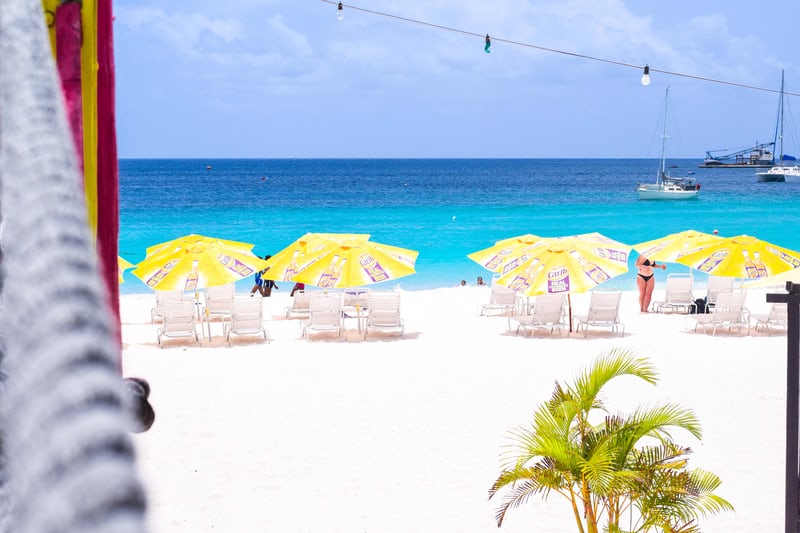
The Barbados Government has said that it is developing plans that it hopes will see it become the southern tourism hub in the Caribbean.
Speaking to the Barbados Hotel and Tourism Association (BHTA), Senator Lisa Cummins, the Minister of Tourism and International Transport, said that as a part of its plan it was negotiating with the cruise lines to make Barbados the homeport for traffic in the southern Caribbean. This would see, she said, the lines when they resumed services, develop itineraries that began and ended Barbados.
Cummins said that at the same time, Government was seeking to help the hotel sector by negotiating with them integrated pre-and post-cruise stays. When finalised, this would be incorporated into the new products government was developing and its marketing programmes, she said.
The Minister told the BHTA that Government was also “redesigning” the private-public sector partnership approach of Barbados Tourism Marketing Inc (BTMI) so that following the pandemic it would emerge as a marketing institution “that positions our destination, attractions, our accommodation sector and all that Barbados has to offer on the international stage in a completely reimagined and competitive way”.
Cummins additionally said that her ministry was planning to develop hanger services for private planes and an overall new business strategy for Grantley Adams International Airport that would attract new business, and increase air traffic, so that the island could “benefit from the high-end luxury segment” of the travel market.
In her remarks, Cummins said that one of the measures being explored to recover the tourism economy involved discussing initially with Heathrow Airport the possibility of a PCR test before departure that would see travellers coming from London receiving a COVID test prior to boarding their flight. As airlift was coming out of Heathrow to the island, she said, her ministry was exploring with it a pilot project like that implemented with the United Arab Emirates, where an on-site facility at Heathrow provides rapid testing for travellers.
If successful, and approved by the island’s Ministry of Health and if consistent with World Health Organisation standard, Cummins said, the concept could be rolled out simultaneously at London Gatwick and “open up opportunities to partner with the other gateways from which visitors are arriving” to give confidence in flying into Barbados.
In her remarks Barbados Tourism and Aviation Minister explained that to position Bridgetown as the southern hub for air travel, it would seek to deepen and expand relationships in existing visitor markets and create new relationships in new markets. It would have as a part of its negotiating objective the inclusion of pre- or post-stay stopovers on the island for vacations sold to other Eastern Caribbean destinations requiring flights to or through Barbados.
The Minister also laid stress on better forecasting of international air traffic and industry trends to develop models for worst- and best-case scenarios sin order to respond more quickly.
“We have begun a considerable body of work which has brought in the Central Bank of Barbados, the University of the West Indies using big data and analytics, the Inter-American Development Bank, the International Financial Corporation of the World Bank along with the national tourism programme of the Ministry of Tourism and International Transport, supported by BTMI”, Minister Cummins told the meeting.
In related developments, the Barbados Government has said that it was developing a plan that will see the island’s tourism workers return to work. At a recent meeting with hotel workers, Senator Cummins and Special Envoy to the Prime Minister of Barbados, Professor Avinash Persaud, discussed a proposal that would see hotels developing a much stronger training component as a part of a comprehensive approach that also involves, according to Persaud, new green investment plans that will transform the sector and move it towards being fully renewable and conservation oriented.
Cummins said that the objective will be to re-emerge from the COVID experience “with a tourism product that has been transformed, but also with a tourism worker that has been upskilled, retooled, retrained and repositioned, to be the frontline worker in a new tourism economy” that will make Barbados “far more effective, efficient and competitive” than before.
Separately Barbados’ Minister of Home Affairs, Wilfred Abrahams has said that following the introduction of the island’s Remote Employment Act 2020 which allows long stays to work remotely, 764 applications had been received from individuals and 315 from family bundles. Of the 1,079 the majority had come from the US, the UK and Canada. Sixty persons had been refused based either on their misunderstanding of the programme or as being undesirable for criminal or other reasons.
This is a lead article from Caribbean Insight, The Caribbean Council’s flagship fortnightly publication. From The Bahamas to French Guiana, each edition consists of country-by-country analysis of the leading news stories of consequence, distilling business and political developments across the Caribbean into a single must-read publication. Please follow the links on the right-hand side of this page to subscribe, or access a free trial.

ExxonMobil has said that it is open to the new Guyana government’s interest in increasing the local content of its operations but not to any renegotiation of its controversial 2016 production sharing content negotiated with the former APNU+AFC government.
The comment by Alistair Routledge, the newly appointed President of ExxonMobil Guyana, follow indications that the country’sgovernment intends reviewing existing and future arrangements with Exxon.
Speaking to Stabroek News, Routledge said that while the company is “open to having discussions to see where we can do more on areas such as local content” it drew the line at any renegotiation of its production sharing agreement.
“Contract sanctity is a fundamental principle of doing business worldwide, particularly in the oil and gas industry, to allow for certainty when making significant, long-term investments. The Government of Guyana has indicated that it will not renegotiate but will review the agreement,” Routledge told the publication. Our work and the support of the government are the basis of a long- term mutually-beneficial relationship for the development of oil resources while creating significant value for Guyanese” he said.
His comments follow suggestions made during the election campaign by President Ifraan Ali and other members of the PPP/C that the in government the party would undertake a review of the 2016 contract with ExxonMobil and its partners in the Stabroek Block, as well as all other activities in the oil and gas sector.
More recently, at his first press conference Vice President Bharrat Jagdeo, whose portfolio includes oversight of the oil and gas sector within the Office of the President, said that in recent meetings it was made clear “we want (Exxon) to do well here; to make money, but Guyanese must share this prosperity; that it is not sustainable otherwise; and we will insist that that happens”. He also told journalists that ExxonMobil had been informed of government’s environmental concerns and that local content commitments will be mandatory before going on to say that these will be the new government’s guiding principles.
In his press conference, Jagdeo additionally indicated that government will establish a Petroleum Commission to provide technical oversight and that the country’s Department of Energy will be placed under the control of the Minister of Natural Resources, Vickram Bharrat, who will be in charge of the sector in conjunction with the President on key policy decisions.
Meanwhile government has said that it has received US$46m for the third 1m barrels of oil under its entitlement. The sum which has deposited into its Sovereign Wealth Fund held in a US Bank of America account, was based on a price of about US$46 per barrel.
A tougher stance on new wells
The new Guyana Government is widely expected to adopt a tougher stance when it comes to the approval of the third of Exxon’s planned wells, Payara. Guyanese analysts and local commentators believe that government should use approval of the Payara well to negotiate a better contract than the one achieved by a largely inexperienced team in 2016 which presently sees Guyana receive a 2% royalty and has provisions regarded as detrimental to the country’s interests.
Payara forms a part of ExxonMobil’s plan to expand production on its Stabroek block to 750,000 b/d by 2025. Exxon, which operates the Stabroek block as part of a consortium with Hess Corporation and China’s CNOOC Ltd, has discovered more than 8bn barrels of recoverable oil off Guyana’s coast. It had previously stated it planned to make a final investment decision on the Payara project in September.
However, any such decision may be delayed as reports suggest that government is to appoint a former premier of the Canadian province of Alberta, Alison Redford QC to review Exxon’s Payara project and advise on the way forward. Exxon however have made clear that although the Guyana portfolio was one of its better opportunities it was not the only one. “If we don’t get the agreement as we are looking for in Payara, the investment money will go elsewhere in ExxonMobil’s portfolio. I just don’t want it to be that this is a contract that is so far different from everything else that we can potentially invest in”, Alistair Routledge said.
This is a lead article from Caribbean Insight, The Caribbean Council’s flagship fortnightly publication. From The Bahamas to French Guiana, each edition consists of country-by-country analysis of the leading news stories of consequence, distilling business and political developments across the Caribbean into a single must-read publication. Please follow the links on the right-hand side of this page to subscribe, or access a free trial.
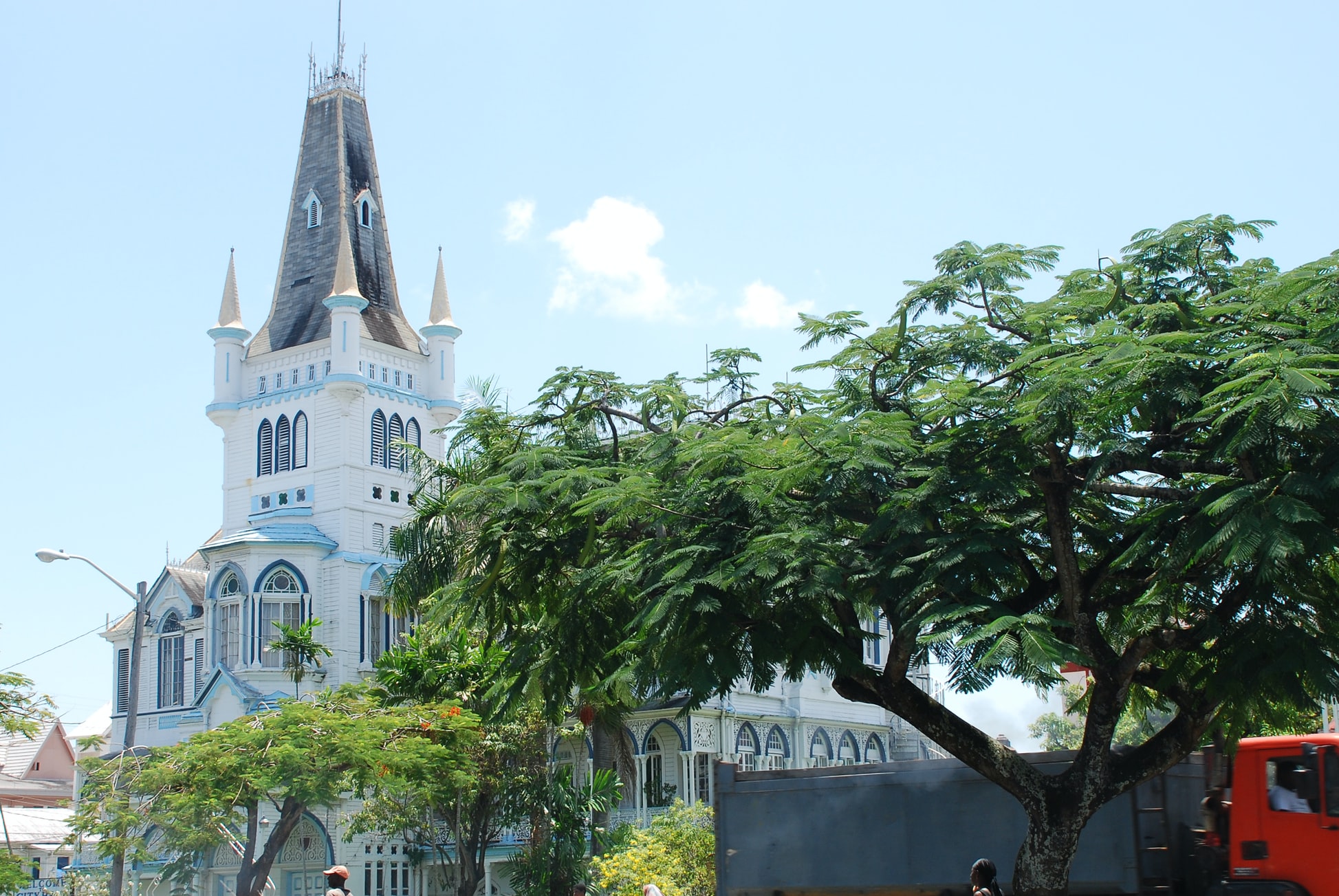
Five months after the country’s 2 March election, Guyana has a new President and government. The final decision to accept the outcome of the recount which showed the opposition PPP/C winning decisively, came as both ExxonMobil and Hess indicated the country’s potential as a major western hemisphere producer of oil.
The swearing in of the new President, Irfaan Ali, followed months of stalemate that saw an exhaustive recount of ballots, an attempt by the Chief Elections Officer to submit an alternative set of results, a succession of legal actions that went all the way to the country’s supreme court, the Caribbean Court of Justice, and travel sanctions being imposed by the US government on leading members of the now former APNU+AFC government.
The fast-moving events came on 2 August after Chief Election Officer finally submitted the results of the recount which showed a PPP/C win to the Guyana Elections Commission (GECOM) Chair Claudette Singh who then declared Ali the new President and his swearing in.
In his inaugural address, Ali promised a term built on unity of the nation and trust. Former Army Chief of Staff, Brigadier Mark Phillips was sworn in as Prime Minister. Ali also announced that former PPP President Bharrat Jagdeo would serve as Vice President, Gail Teixeira as Minister of Governance and Parliamentary Affairs, and Anil Nandlall as Attorney General and Minister of Legal Affairs.
The swearing in followed days of uncertainty but concluded when former President David Granger indicated in a statement that he was ready to concede but said that his party would file an elections petition challenging the declared outcome. In his statement he noted that the APNU+ AFC coalition continued to maintain that anomalies and irregularities uncovered during the recount process cannot be accepted but observed that GECOM had ‘a legal obligation as a result of the recent ruling of the Court of Appeal, to proceed with a declaration’.
Oil majors indicate country’s offshore potential
The announcement came just days after the Hess Corporation announced that an appraisal of the Yellowtail well on the offshore Stabroek Block it shares with ExxonMobil and China National Offshore Oil Corporation (CNOOC) has indicated two additional reservoirs. In an earnings call the company indicated that its finds at Yellowtail-2, and Yellowtail-1 had high quality reservoirs “demonstrating the world class quality of this basin”. The statement added that ‘this additional resource is currently being evaluated and will help form the basis for a potential future development’.
Announcing separately its desire to move ahead rapidly on its discoveries in the Stabroek field, ExxonMobil told its stockholders that, in contrast with other parts of the world, it would be maintaining levels of capital expenditure in Guyana and was seeking quick approval for its third well, Payara, while warning that further delays could be economically damaging to Guyana.
In May, the Director of the country’s Department of Energy, Dr Mark Bynoe, had said that the delay in the approval process for Exxon’s third well was due to unresolved issues surrounding its development plan and Guyana’s current political crisis.
At the time Exxon had indicated that its forecast production of 750,000 bpd by 2025 would be delayed by about six months to a year.
ExxonMobil has made 16 discoveries since May 2015 and has estimated it will be in Guyana for at least 40 years. The company is still to develop some 14 other wells in the Stabroek Block area which is so far estimated to hold 8 bn barrels of oil equivalent. Exxon plans to also start works in the Canje and Kaieteur blocks where it is partnering with other companies.
According to Stabroek News, Guyana received about US$35 per barrel of its crude when it sold the second of the five lifts of 1m barrels of oil that it is entitled to this year. The paper had reported that Guyana will continue to sell it portion of recovered oil at Brent market prices and not hedge.

[screenshot via global voices from Stabroek News livestream]
Tension is continuing to rise in Guyana following a statement by the country’s APNU+AFC government that it will not accept a legally directed declaration by the Guyana Elections Commission (GECOM) based on the recounted results which show that it lost the country’s 2 March elections.
Responding, the General Secretary of the Opposition PPP, former President, Bharrat Jagdeo said that the President, David Granger, and those who are supporting him “are living in a fool’s world if they believe they will get away with that”. He also warned of “fierce resistance”.
In a statement, Jagdeo said that the government’s position was “in clear defiance of the international community, the Chief Justice, the Caribbean Court of Justice (CCJ) and GECOM who have all been clear that any declaration has to be made on the basis of the figures from the recount”. He also noted that the APNU+AFC statement contrasted with earlier statements made by President Granger that he will accept any declaration made by GECOM.
“If Granger and his band of riggers believe that they can continue to hang on to office after the declaration has been made then they are living in a fool’s world. If the international community was prepared to condemn and levy sanctions against people who are trying to undermine democracy, even before the declaration, just imagine the consequences the riggers will face if they refuse to leave office after the declaration – essentially staging a coup d’état”, Jagdeo said.
Then in a sign of the danger of escalation and confrontation if the issue is not resolved peacefully, the opposition leader said:“Needless to say, such a move will be met by fierce resistance by the PPP and other forces fighting for democracy”.
The tense stand-off follows a week in which the Guyana government has said that it will appeal the latest high court ruling stating that the national vote recount concluded last month showed a clear win for the opposition People’s Progressive Party (PPP) and must be reported as the outcome of the country’s general election.
In a fresh judgement, Guyana’s acting Chief Justice, Roxane George-Wiltshire, ruled on 20 July that the national vote recount overtook the original post-election vote count and that earlier declarations made by the country’s Chief Elections Officer, Keith Lowenfield and others, had been correctly set aside by the Chair of GECOM. George said that the “only” data that can be used were the recount results and that previous declarations cannot be “resurrected.” She consequently declared that Lowenfield, must make a declaration as directed by the GECOM. Lowenfield was not a “lone ranger” or a law unto himself, the Chief Justice said, and must comply as directed by GECOM following the earlier Caribbean Court of Justice (CCJ) endorsement of the recount and the election outcome.
The latest legal case resulted from an application to the courts by Misenga Jones, an agent of the APNU+AFC Coalition seeking a declaration that the Chief Elections Officer could decide for himself what numbers he chooses from the results to determine the outcome and that GECOM was constitutionally bound to accept his report.
The High Court ruling ought to have meant that Lowenfield should have prepared a report based on the recounted national vote to bring Guyana’s election debacle to a close, and for peaceful transition of power take place. However, he declined to do so and another appeal was launched by the APNU+AFC indicating they would if necessary seek a hearing in the country’s supreme court the CCJ.
Prior to the judgment, international criticism of the failure of President Granger’s government to respect the outcome of the recount had been mounting with the country’s western allies escalating the pressure on his government to accept the result.
In an indication of the future consequences for any Caribbean government failing to respect a democratic election outcome, the US Secretary of State, Mike Pompeo, announced on 15 July, visa restrictions ‘on individuals responsible for or complicit in undermining democracy in Guyana’ making clear that immediate family members may also be denied visas.
Noting that the US has no preference as to which party wins elections if derived through ‘a free and fair electoral process that is credible’, he said that forces that repeatedly refused to accept the will of the people via the ballot box pose a danger for Guyana’s citizens and the hemisphere as a whole.
Subsequently the US Ambassador to Guyana, Sarah-Ann Lynch, declined to name those whose visas had been revoked by the US Government, but told the media that the decision sent a clear message about the consequences of “subverting democracy and the rule of law”.
Responding, the Granger Government said in a statement that it regretted the position of the US, noting that the executive branch ‘has not participated in the undermining of the electoral process’. It urged all countries interested in Guyana’s development to await the logical conclusion of the (legal) process, which is being managed by the elections commission, in accordance with the Constitution of Guyana’.
It also became clear that Canada and the UK were considering sanctions if the recount was not respected. The Brazilian government called on the Guyanese authorities to use the recount figures to make the declaration noting that ‘delaying the conclusion of the electoral process poses a serious threat to stability in Guyana”.
In an unusually strongly worded statement about a CARICOM neighbour, the present Chairman of CARICOM, Dr Ralph Gonsalves, the Prime Minister of St Vincent, said that “a rogue clique within Guyana cannot be allowed to disrespect or disregard, with impunity, the clear, unambiguous ruling of the Caribbean Court of Justice …. The entire world realises that a small group of persons, in and out of Guyana, are seeking to hijack, in plain sight, the elections, and thus the country”. He also stressed that the internal situation in Guyana was “pregnant with real danger for the people of Guyana and the Caribbean Community”.
This is a lead article from Caribbean Insight, The Caribbean Council’s flagship fortnightly publication. From The Bahamas to French Guiana, each edition consists of country-by-country analysis of the leading news stories of consequence, distilling business and political developments across the Caribbean into a single must-read publication. Please follow the links on the right-hand side of this page to subscribe, or access a free trial.

[image shutterstock]
The leader of the Dominican Republic’s opposition Partido Revolucionario Moderno (PRM), Luis Abinader, has won the Dominican Republic’s 4 July presidential elections. The PRM also swept the congressional elections taking control of both the Senate and the Chamber of Deputies enabling it to legislate to deliver on its platform, and to control judicial appointments. In winning, the PRD ended the opposition Partido Liberacion Dominicana’s (PLD) sixteen years in office.
The final results indicate that Abinader took 53% of the votes in the first round, defeating Gonzalo Castillo, the PLD’s presidential candidate who took 37% of the vote. Castillo was backed by the outgoing President, Danilo Medina.
Abinader, one of the country’s leading businessmen, has not previously held political office. He will now have to address several significant challenges including the impact of the COVID-19 pandemic which has severely damaged the country’s previously stellar economic growth. When he takes office on 16 August, his government will have to find ways to stimulate the economy, recover activity in tourism and boost all other productive sectors if he is to restore the country’s previously strong internatio nal reserves.
Some Dominican analysts believe that this may mean that the Abinader Government will have little choice other than to approach the IMF for a longer term, flexible stand-by agreement than the US$650m credit line negotiated in April by the Central Bank.
Prior to being elected, Abinader said that he would introduce short
term special measures aimed at recovering from the economic impact of the pandemic and policies that would relaunch of the economy. During the campaign he promised a universal minimum subsistence wage of DOP10,000 pesos (US$173). This, he said, would be paid during the process of recovery and until employment was restored for the country’s workers. He also promised tax incentives to encourage construction activity with the aim of developing low-cost housing, infrastructure and aqueducts.
As the only party to develop a strategy to improve the Dominican Republic’s relations with Haiti, Abinader and the PRM are also expected to try to rebalance trade and address the fraught issue of cross-border migration by reactivating the Joint Commission which has been dormant for some time.
By Dominican standards, the campaign was unusually peaceful with the absence of physical and verbal violence, public meetings and political ‘caravans’ as a result of COVID-related restrictions on gatherings.
Despite the PLD’s strong pre-pandemic economic record, voters were concerned about the party’s delay in responding to the pandemic followed by a too rapid reopening of the economy. Continuing social disparities as well as allegations of corruption and impunity from prosecution also impacted the party’s chances at re- election. The turn out was high with the markedly new political activism of younger voters observed since 2019 affecting the election outcome.
The elections, delayed since May because of COVID-19 and earlier voting machine irregularities, took place as the pandemic continued to surge across the country with the numbers new infections reaching record highs. Voters were required to wear face masks with only one voter at a time being permitted to enter polling stations. During the campaign, Abinader tested positive for the virus and had to self-isolate for much of June.
Abinader is of Lebanese descent and, until his election, was the Executive Vice President of the Dominican ABICOR Group. Since the 1970s the company has developed and operated real estate and tourism projects in the country including Super Clubs of Jamaica’s local Breezes hotel chain. It also owns Cementos Santo Domingo SA. Born in 1967 he is the first Dominican leader not to have been alive during the Trujillo dictatorship
The outgoing President, Danilo Medina, served two consecutive four-year terms and was ineligible to seek re-election after failing to win sufficient backing for the constitutional change needed for him to run for a third time. His predecessor, former President Leonel Fernandez, who ran on a Fuerza del Pueblo ticket, took just 9% of the vote.
This is a lead article from Caribbean Insight, The Caribbean Council’s flagship fortnightly publication. From The Bahamas to French Guiana, each edition consists of country-by-country analysis of the leading news stories of consequence, distilling business and political developments across the Caribbean into a single must-read publication. Please follow the links on the right-hand side of this page to subscribe, or access a free trial.

The Caribbean Court of Justice (CCJ) has issued an order restraining Guyana’s Elections Commission (GECOM) from declaring the outcome of a recount of the votes cast in the country’s 2 March general election. It did so pending a full hearing of a challenge to a decision by the country’s Chief Election Officer, Keith Lowenfield, to invalidate nearly 115,787 or almost 25% of all the votes cast.
The order followed a challenge by the opposition People’s Progressive Party/Civic (PPP/C) to an earlier legal ruling by Guyana’s Court of Appeal in relation to the meaning of the language used by Lowenfield. His report to GECOM on the recount claimed that based on the “valid and credible votes” cast, the incumbent, A Partnership for National Unity + Alliance for Change (APNU+AFC), had won the election.
As Insight’s 12 June issue (Volume 42 Issue 12) reported, the 33-day recount had, however, indicated that the opposition PPP/C had secured a total of 233,336 votes to the APNU+AFC’s 217,920, with 5,214 votes going to the Joinder Alliance. This should have meant under normal circumstances and the country’s proportional representation system that the PPP/C would have been declared the winner, assume the Presidency and have 33 seats in parliament to the APNU+AFC’s 31, and the Joinder Alliance one .
The CCJ’s restraining order was made pending a full hearing of the dispute. It followed from a decision by the PPP General Secretary, Bharrat Jagdeo and its Presidential candidate Irfaan Ali to seek special leave to appeal after a local court ruling and to request the CCJ expedite the case. The case is likely to be heard on 1 July with Guyana’s Attorney General, Basil Williams, contending that the court does not have jurisdiction to hear the appeal. The Trinidad-based CCJ, is Guyana’s final appellate court.
Speaking about the latest developments, CARICOM’s Chair, Mia Mottley, said that the regional body was concerned at reports that Lowenfield had submitted a report to GECOM which was contrary to the directions given by GECOM and which did not reflect the results of the recount process as certified by its staff and witnessed by representatives of the political parties. “Regrettably we have seen a level of gamesmanship that has left much to be desired and has definitely not portrayed our Caribbean region in the best light”, she said.
Similar statements have come from the US, UK, Canada, and the EU’s diplomatic representatives who issued a joint statement calling on GECOM ‘to meet its constitutional duty to issue a Declaration on the basis of the results of the Recount as confirmed by CARICOM, to ensure the democratic choice of the people is fulfilled’.
The Organisation of American States (OAS) said that the election had gone on long enough and called for the process to be “brought to an end, based on the results of the national recount.” “There is a fine line between the right to redress and the use of the courts to stall the electoral process and with respect for the will of the majority of the electorate”, it said.
Earlier in the month, a CARICOM team which scrutinised the recount had said that nothing should prevent the Chair of the Guyana Elections Commission from declaring the results of the recount.
“We are…of the unshakeable belief that the people of Guyana expressed their will at the ballot box and as a result, the three-person CARICOM Observer Group concludes that the recount results are completely acceptable,” the report presented to GECOM stated. It added that “the national recount process …. despite some of its minor flaws, is not an indictment of the 2020 polls and the team categorically rejects the concerted public efforts to discredit the 2020 polls up to the disastrous Region 4 tabulation.
What happens next is uncertain. Lowenfield’s report would normally lead to the declaration of a final result but recent developments suggest that despite growing regional and international condemnation factions within Guyana’s governing party seem intent on determining the outcome to their advantage.
In a further development on 14 June the incumbent President, David Granger, appeared to suggest that a state of emergency would be required to pave the way for the reconvening of a Parliament and the approval of funds for government spending, if the outcome of the recount saw GECOM set it aside the result on the basis of fraud or other irregularities.
“It is possible…I know it has been done before. It is not an option that I would embark on without receiving agreement of all the parties concerned. I don’t think it should be undertaken lightly or arbitrarily,” he told the Guyanese media. “Right now, we are not running on empty, but we are running with very low funds,” Granger said.