
Caribbean Insight
The Caribbean Council's Flagship Fortnightly Publication
Caribbean Insight is The Caribbean Council’s flagship fortnightly publication. Our comprehensive publication offers the latest in news, analysing business and political developments across the region.
From The Bahamas to French Guiana, each edition consists of a country-by-country analysis of the leading news stories of consequence, distilling developments across the Caribbean into a single must-read publication. Each edition contains two leading articles providing in-depth analysis of topical political, economic and developmental issues in the region.
Don’t miss out on the latest news business and opportunities from the region. Subscribe to receive the Caribbean Insight Publication directly to your inbox. Caribbean Insight Subscribers receive 23 editions over 12 months. Click to Subscribe.
Interested in seeing a sample edition of Caribbean Insight? Follow the link.
Lead Articles Featured on Caribbean Insight
19th January 2024
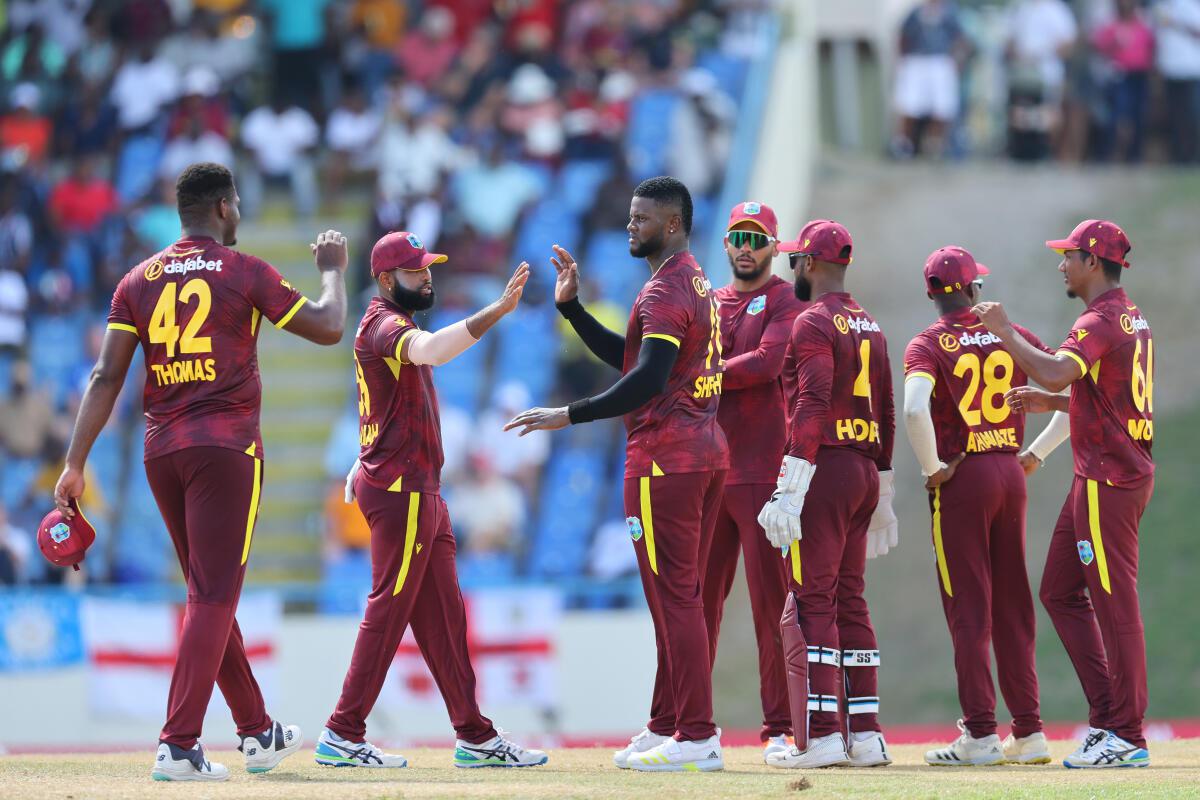
The International Cricket Council (ICC) 2024 Men’s T20 World Cup is projected to bring in over US$300mn for the Caribbean in the coming months.
Scheduled for 1 to 29 June 2024 across the Caribbean and the US, the ninth edition of the tournament will see several Caribbean countries hosting matches for the highly anticipated event.
“This tournament is projected to yield over US$300mn in direct economic impact for the Caribbean. Moreover, it is anticipated to captivate more than a billion viewers worldwide through television broadcasts, further elevating the global stature of the Caribbean as a sporting and tourist destination,” said Cricket West Indies (CWI) President, Kishore Shallow.
Antigua and Barbuda, Barbados, Guyana, St Lucia, St Vincent and the Grenadines, and Trinidad and Tobago are the six Caribbean countries chosen to host the 55 matches, along with New York City, Dallas, Texas, and Florida in the US.
Dominica had initially been shortlisted to host matches but subsequently pulled out after assessments showed that renovations to the cricket stadium could not be completed in time.
Grand Prairie Cricket Stadium in Dallas is set to host the tournament opener between the USA and Canada on 1 June, while the Kensington Oval in Barbados will host the final on 29 June.
“The ICC Men’s T20 World Cup 2024 marks an exciting expansion of our sport with more teams than ever before set to compete in this event. It’s going to be an incredible spectacle bringing together 20 international teams from Africa, the Americas, Asia, East-Asia Pacific and Europe,” said ICC Chief Executive, Geoff Allardice.
A study of the 2007 Cricket World Cup hosted in the Caribbean, reported that attendance for the tournament averaged 11,176 persons per match. In Guyana, attendees typically formed groups of three individuals and stayed for an average of 7.65 nights. Visitors spent an average of US$1,902 on lodging and US$934 on food and beverages, while total daily visitor spending was estimated at US$191.
Regional organisers are hoping that this year’s tournament can attract similar levels of visitors and spending to provide Caribbean countries with a needed economic boost as they shake of the lingering effects of the COVID-19 pandemic.
“This influx of visitors, heightened tourism, and burgeoning business prospects will create a ripple effect,” predicted Shallow of the upcoming tournament, adding that “the impact on jobs, revenue streams, and the overall quality of life for our citizens will be substantial”.
Additionally, in preparation for the tournament, Caribbean governments are set to inject significant sums into local economies by spending millions to renovate and upgrade stadia in order to meet ICC standards for hosting World Cup matches.
For example, St Vincent and the Grenadines, which will host two Group Matches and two Super-8 Matches, has allocated some US$4.44mn to renovate the Arnos Vale Sporting Complex ahead of the tournament, while Antigua and Barbuda are looking to spend at least US$2.6mn to prepare the Sir Vivian Richards Stadium.
In late 2023, Barbados Prime Minister Mia Mottley signed a US$25mn loan with the African Export-Import Bank (Afreximbank) to renovate and upgrade the Kensington Oval ahead of the cricket World Cup and to help with its future maintenance.
“This region must give our cricketers the best available coaching and technology if they are to be able to resume their global position in cricket,” said Mottley.
The 2024 event will be the third time a men’s World Cup will be held in the West Indies, and the first in 14 years. The Caribbean previously hosted the 2007 ODI World Cup and the 2010 World T20.
“It will also be great to have an ICC event back in the West Indies, which has such a rich history of the game. It has hosted World Cups with great success in the past and this tournament will certainly provide a boost to the game there, especially with the final being played in Barbados,” said ICC’s Allardice.
This is a lead article from Caribbean Insight, The Caribbean Council’s flagship fortnightly publication. From The Bahamas to French Guiana, each edition consists of country-by-country analysis of the leading news stories of consequence, distilling business and political developments across the Caribbean into a single must-read publication. Please follow the links on the right-hand side of this page to subscribe, or access a free trial.
Photo Credit: GETTY IMAGES
5th January 2024
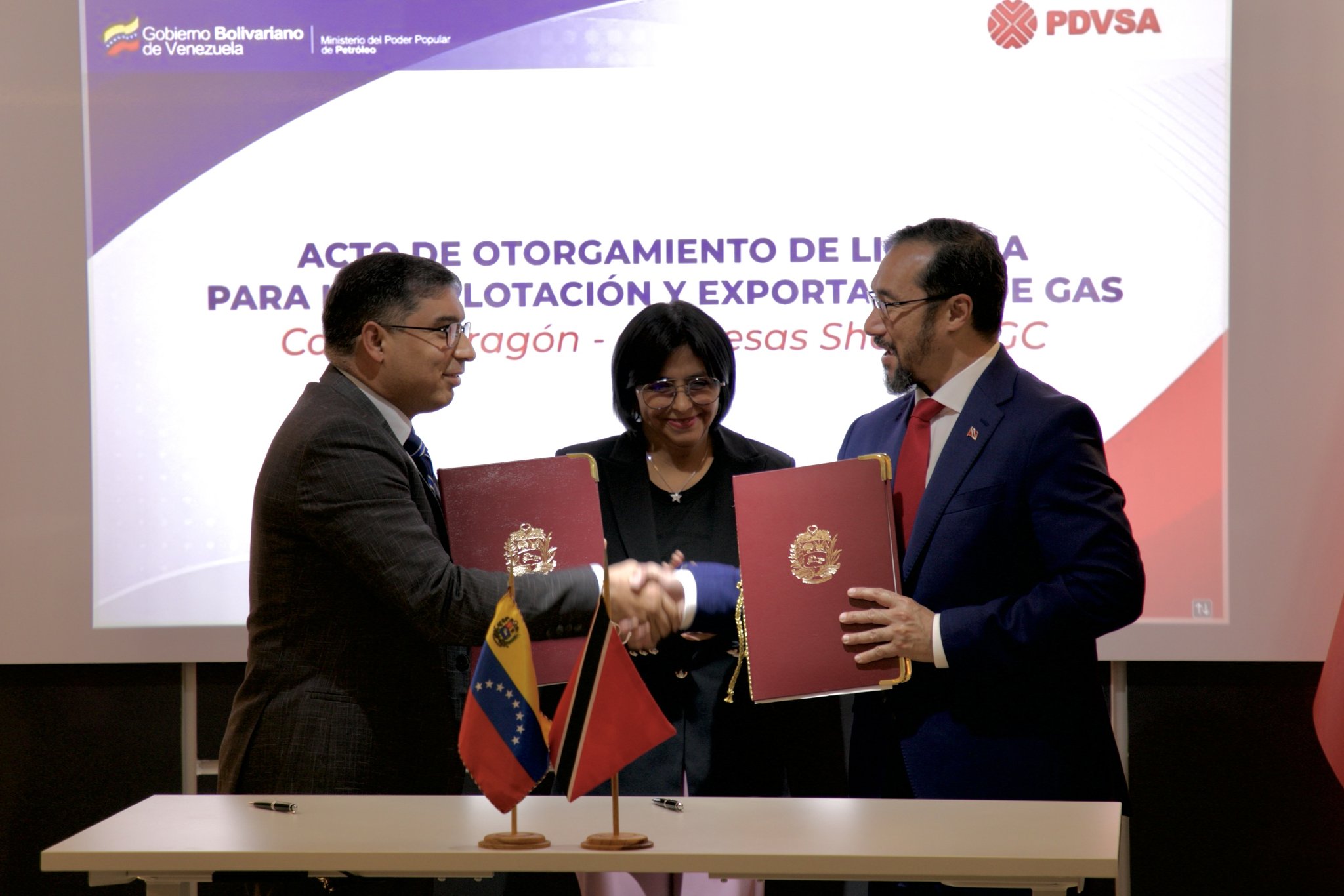
Trinidad and Tobago has officially been granted a license for the exploration, production, and export of natural gas from the Dragon Gas Field in Venezuela.
Making the announcement about the deal, which was signed in late December 2023, Trinidadian Prime Minister Keith Rowley said that it marks a historic development in the partnership between the two nations, allowing Trinidad and Tobago to access and process Venezuela’s vast natural gas reserves.
“To have entered into this agreement in 2023, to open this door to allow us with the infrastructure on the ground in Trinidad, to access and process the raw material from below the ground in Venezuela, puts the two nations in a position to play a bigger and beneficial role in the world’s economy and for the benefit of the people of Venezuela and Trinidad and Tobago,” said Rowley.
In a statement, the Government of Venezuela announced that its state oil company PDVSA has issued a 30-year license to the Trinidad and Tobago’s state-owned National Gas Company (NGC) to develop the gas field with Royal Dutch Shell as the operator.
“The Dragon Field is set to become one of the most important gas production hubs in the region… With this license, we are consolidating the operational settings for its definitive development, harnessing its full potential for the benefit of our country and the world,” said Venezuelan Oil Minister Pedro Tellechea.
The agreement comes after protracted negotiations which stalled on multiple occasions because of US sanctions on Venezuela.
In January 2023, a two-year Office of Foreign Assets Control (OFAC) waiver was secured by Port of Spain from the US Treasury Department for exploitation of the Dragon oil field with the proviso that Venezuela received no cash payments.
Later in October 2023, some US sanctions were lifted against Venezuela after President Nicholas Maduro signed an electoral deal with the country’s main opposition party.
This led to an amendment to the Treasury waiver which now allows Trinidad and Venezuela to agree their own payment terms.
Trinidad’s Energy Minister Stuart Young noted that the full commercial terms agreed is the culmination of seven years of negotiations which began in 2016 with a government-to-government agreement, followed by a commercial term sheet which was set out in 2018.
In recent months, the Rowley Administration has faced criticism over the apparent inability to close a deal on Dragon following little implementation of these agreements.
“We must recall there was another deal signed in 2018 when Dr Rowley went to Caracas and since then there has not been much movement on the Dragon gas deal which is arguably the centre piece of this Governments energy policy,” said Former Energy Minister Kevin Ramnarine.
“In terms of a next move, it would be useful to know what is the role of the NGC, the role of Shell and PDVSA and who will pay for the development which will run into hundreds of millions of US dollars or more. What will be the exposure of the NGC?” questioned Ramnarine.
The government has moved to clarify some of these concerns following the issuance of the license and the latest agreement on commercial terms.
“We were able to move PDVSA out of the formula which is even better for us now. And the producers will be Shell and NGC,” said Energy Minister Young, announcing some of the changes contained in the new agreement.
“We managed to negotiate that NGC will be in the full value chain and that we’re going to be an equity player in the production and the exportation of this gas to Trinidad and Tobago, at a very competitive price that will benefit both the people of Venezuela and us here in Trinidad and Tobago,” added Young.
During the first phase of the project, it is anticipated that some 185mn cubic feet of natural gas will be generated daily which will be transported through the construction of a 17-kilometre pipeline connecting Venezuela’s Dragon field to Shell’s Hibiscus field in Trinidadian waters, where liquefied natural gas (LNG) and petrochemicals will be produced.
Reuters reported that first output from Dragon could be achieved in two years if positive investment decisions are made in the coming months.
In the earlier stages of negotiations, Venezuela had advocated for a second pipeline linking the Dragon field to Venezuela’s coast to address domestic demand. Although specific details about the gas line were not mentioned in the recent statement, subsequent project phases might encompass this aspect.
The Dragon Gas field is estimated to house approximately 4.2tn cubic feet of deposits. It was discovered by PDVSA over 10 years ago, but infrastructural development came to a halt shortly thereafter when US sanctions began to affect Venezuela’s oil and gas sector.
The deal has largely been welcomed by analysts and the general population as Trinidad and Tobago moves to increase its slowing oil and gas production on which the economy so heavily depends.
This is a lead article from Caribbean Insight, The Caribbean Council’s flagship fortnightly publication. From The Bahamas to French Guiana, each edition consists of country-by-country analysis of the leading news stories of consequence, distilling business and political developments across the Caribbean into a single must-read publication. Please follow the links on the right-hand side of this page to subscribe, or access a free trial.
Photo: Venezuelaanalysis.com

15 December 2023
Despite the last-minute controversies surrounding the latest iteration of a global climate change deal, Caribbean countries may still consider COP28 one of progress.
Staged in in Dubai over 1 to 12 December 2023, the Conference of Parties to the UN Framework Convention on Climate Change (UNFCCC) known as COP, saw an early breakthrough with an agreement to operationalise the much talked about Loss and Damage Fund which is mean help to shoulder climate change adaption costs, reduce its future impact, and pay for ongoing loss and damage.
“Today’s news on loss and damage gives this UN climate conference a running start. All governments and negotiators must use this momentum to deliver ambitious outcomes here in Dubai,” said UN Climate Chief and former Dominican Government Minister, Simon Stiell.
Wealthy countries have so far pledged over US$700mn to the fund, with the United Arab Emirates (UAE) announcing US$100mn on the opening day of the conference. Germany announced US$100mn, France and Italy pledged US$108mn each, while the US and Japan, the world’s third largest economy received significant criticism for their pledges of just US$17.5mn and US$10mn, respectively.
“This has probably been the most progress we’ve seen in the last 12 months on finance… but we’re not where we need to be yet,” said Barbados Prime Minister Mia Mottley at the conference, which was attended by several CARICOM leaders, adding that the total pledged was a far cry from the US$420bn which is needed.
She argued that a global 0.1% tax on financial services could raise US$420bn. “If we took 5% of oil and gas profits last year — oil and gas profits were US$4tn — that would give us US$200bn… If we had a 1% tax on the value of shipping — that, last year, the value of that was US$7tn — that would give us US$70bn,” said Mottley.
Several CARICOM countries used COP as an opportunity to launch their own climate change initiatives as the focus on long-term sustainability deepens.
At a side-event, St Kitts and Nevis launched its plan to become a sustainable island state. Themed “Moving Toward Sustainability with SISA2040,” the plan will see the country focusing on green energy, including a significant solar and battery energy storage project, and exploring geothermal energy on Nevis.
Meanwhile, The Bahamas launched the Bahamas Sustainable Investment Programme (BSIP) with a target of establishing a US$500mn funding mechanism to enhance Bahamian infrastructure to withstand climate change and transition to clean energy. It will also support conservation of coastal zones, reduce biodiversity loss, promote regenerative agriculture, carbon sequestration, and participation in natural asset-backed carbon credit programmes.
At COP, Barbados announced that it will partner with the World Bank Group’s International Finance Corporation (IFC) to develop the country’s first utility-scale onshore wind farm, known as the Lamberts project. IFC will serve as the lead transaction advisor to structure the 30-to-50-megawatt (MW) project as a public-private partnership (PPP) which supports Barbados’ goal to transition to 95% renewable energy by 2030. The US$80mn project, to be mostly owned by a private sector sponsor selected through a competitive tender process, signifies a shift towards involving private enterprise in Caribbean renewable energy infrastructure development.
Jamaica also signed a financial advisory services agreement
with the IFC for the development and structuring of the National Broadband Project to allow private investors to build a modern broadband network in the country.
The Government of Dominica and Dominica Electricity Services (DOMLEC) also used the conference to sign an agreement with Ormat Technologies Inc. and its subsidiaries to develop a 10MW geothermal power plant in Laudat by the end of 2025. Under the deal, Ormat will finance the construction, operate, and maintain the plant and geothermal wells for 25 years, while Dominica will maintain ownership of the wells, lands, and other assets it has invested in.
The Caribbean Development Bank (CDB) also announced at COP28 that it is leading the development of a regional online monitoring, reporting, and verification (MRV) system for tracking climate finance. This system will help Caribbean countries track and report finance flows for climate-related actions more effectively, reducing duplication among donors, and facilitating efficient use of resources.

1st December 2023
Saudi Arabia’s influence in the Caribbean appears to be on the rise following the conclusion of the inaugural Saudi Arabia-CARICOM Summit.
Held on 16 November in Riyadh, the main sessions were co-chaired by Mohammed bin Salman bin Abdulaziz Al Saud, Crown Prince and Prime Minister of the Kingdom of Saudi Arabia and Roosevelt Skerrit, Prime Minister of Dominica and current CARICOM Chairman.
“There is a deepening interest of Saudi Arabia in the region and it is hoped that Jamaica will be able to capitalise on some of this stimulated interest by getting broader investments,” said Jamaica’s Foreign Minister Kamina Johnson Smith.
The summit continues to be a significant talking point as several of the 15-member CARICOM bloc announce areas of cooperation and agreements as countries try to tap into the Saudi’s US$30bn soft loan fund.
“This week was an exceptional week and historic week in that we for the first time met with the Kingdom of Saudi Arabia as a community to be able to ensure that we establish a new trajectory for our relations between the Kingdom and the Caribbean community,” said Barbados Prime Minister Mia Mottley on her return from Riyadh.
In a joint statement issued at the end of the summit the countries announced several initiatives. Both sides committed to consulting and exploring cooperation in several fields, including education, health, maritime collaboration, connectivity, logistics, food and energy security, and tourism, aligning with the Sustainable Development Goals (SDGs).
CARICOM welcomed a proposal to establish an international water organisation based in Riyadh. They also aimed to strengthen trade and investment relations, promote cultural and creative industries, enhance tourism cooperation, and address climate change through reducing emissions and adopting clean energy technologies.
Saudi Arabia’s Middle East Green Initiative (MGI) and its US$2.5bn allocation for MGI projects and governance were acknowledged in the statement, with a focus on supporting Small Island Developing States (SIDS) in climate mitigation and adaptation measures.
CARICOM has formally endorsed Saudi Arabia’s bid to host Expo 2030 in Riyadh and supported its candidacy to host the 2034 FIFA World Cup, an outcome which some political analysts say was the Kingdom’s primary objective of the summit.
Several Individual CARICOM countries also announced loan agreements with Saudi Arabia as the Saudi Development Fund (SFD) continues to expand its reach in the region including a recent US$41mn loan agreement with Dominica.
Barbados has revealed that some US$100mn in funding will be provided by the Saudi Fund for an urban renewal project geared towards providing adequate water facilities and proper housing solutions in the country.
St Vincent and the Grenadines announced an agreement for a further US$50mn in loans from the SFD, which brings the total agreed in 2023 to US$66mn. Prime Minister Ralph Gonsalves said that some US$30mn will be allocated to housing repair and reconstruction, while the balance will be used to develop sporting facilities, and other initiatives.
Meanwhile, St Kitts and Nevis revealed that discussions had taken place with the SFD to support efforts to improve water security including by offering the services of skilled engineers to supervise the design and construction of the desalination plant planned for 2024.
Prime Minister Terrance Drew also reported that the SFD had expressed the potential to provide the necessary financial support of US$20mn to cover the remaining expenses for the country’s geothermal project’s drilling efforts.
While Jamaica did not agree to any funding, the country signed a memorandum of understanding (MoU) which now gives the Andrew Holness Administration access to loan facilities. “In respect of Jamaica, we signed an MoU with the SFD which creates a framework for us to engage on concessional loan funding for national projects,” said Foreign Minister Johnson Smith.
“We have on offer from them, memoranda of understanding in particular to allow technical teams from Grenada to visit the Kingdom of Saudi Arabia so that we can have further conversations in relation to policy, guidance, advise potential investment as well as opportunity for training, technology exchange and information,” said Grenada’s Prime Minister Dickon Mitchell on talks for assistance to the islands’ public healthcare services, including the building of a new teaching hospital.
Accompanying Prime Minister Keith Rowley, Chairman of the Trinidad-based Caribbean Airlines also held talks on collaboration under the Saudi Air Connectivity Programme in line with its 2023 to 2027 strategic plan. Discussions were geared at seeking to expand its network and facilitate affordable travel to Saudi Arabia, especially for the Hajj and Umrah pilgrimages.
While some saw the summit as a means for Saudi Arabia to get CARICOM’s support for its Expo 2030 and World Cup bids, there is strong evidence that the region stands to benefit greatly from continued engagement with Riyadh.
This is a lead article from Caribbean Insight, The Caribbean Council’s flagship fortnightly publication. From The Bahamas to French Guiana, each edition consists of country-by-country analysis of the leading news stories of consequence, distilling business and political developments across the Caribbean into a single must-read publication. Please follow the links on the right-hand side of this page to subscribe, or access a free trial.
Photo: caricom.org

17th November 2023
The majority state-owned Telecommunications Services of Trinidad and Tobago (TSTT) has been hit by a major cyberattack.
Global hacker group Ransomexx disclosed that they had launched a ransomware attack on TSTT, compromising and extracting up to six gigabytes (GB) of data.
This data breach included personal information such as full names, email addresses, national identification numbers, contact numbers, and other confidential information of the companies mobile, fixed line, broadband and other customers.
Ransomexx released a CSV file on the dark web containing comprehensive details from over 1.2mn TSTT customers as proof of the hack. The data was downloaded more than 13,000 times as of early November.
Confirming the breach, CEO Lisa Agard—who has since been fired from the top job—said that on 9 October, TSTT’s “systems detected a security breach which affected the availability of TSTT’s internal virtual infrastructure or private cloud. The malware was immediately isolated and a comprehensive investigation to ascertain the full impact of the incident was launched”.
At the time, TSTT said that “there was no loss or compromise of customer data, i.e., no data was deleted from TSTT’s databases or manipulated,” and that “the company has not corroborated data currently in the public domain purported to be TSTT’s customer information”.
However, in a later statement the company acknowledged that 6GB of data—less than one percent of the petabytes of data they manage—had been accessed. They assured that the bulk of their customer data remained secure, and importantly, no passwords were affected.
In an attempt to quell the growing concern of customers, TSTT said that a portion of the compromised data came from an outdated system that has been decommissioned from active use, noting that much of this data may no longer be current.
Despite this, Clyde Elder, the Secretary General of the Communications Workers’ Union, has levelled criticism at the company for a lack of transparency from the beginning, accusing them of evading full disclosure to the public.
Prime Minister Keith Rowley, whose identification card number, driver’s permit number and passport number were reportedly compromised in the breach, called the cyberattack a “national security threat”.
Rowley said that while some of the data in the breach was not his, “the fact that these data or any other for that matter, falling into the hands of criminals, is deeply disturbing and this occurrence should be treated with the greatest competence and utmost sincerity”.
“The company took immediate steps to minimise the security vulnerability, successfully isolating its systems and applications. These applications were subsequently quarantined, rebuilt and put back into production as part of clearly defined policies and procedures,” said a statement from TSTT.
Responding to criticism about the handling of the breach, the company noted that it has sought the assistance of globally acknowledged cybersecurity specialists and affiliates to probe the attempted security violation and to counsel on the adoption of suitable supplementary security safeguards and procedures.
However, multiple assurances and apologies could not stave off those calling for the dismissal of TSTT CEO Lisa Agard over her handling of the cyberattack. A press release from the company announced that Agard, who had been in the role since 2020 had departed the company with immediate effect. Former TSTT General Manager (Customer Experience and Marketing) Kent Western has been appointed to act in the role.
Agard’s departure comes as the company reported a significant increase in profits, announcing a post-tax gain of US$21mn for the six months ending September 30, 2023, a 316% rise from the previous year. Revenue rose by 6% to US$145mn, and operating profit jumped to US$46mn, indicating a 53% increase. The company’s adjusted EBITDA also grew by 16% to US$71mn and its credit rating improved from B+ to BB-, reflecting its stronger financial position, with a closing cash position of US$53mn against a debt of US$470mn.
TSTT is the latest in a growing list of Caribbean entities to be hit my significant cyberattacks. Regional conglomerate Courts (a subsidiary of Unicomer Group) revealed this week that it has launched an investigation into a cyberattack, while the Massy Group was hacked earlier this year.
This is a lead article from Caribbean Insight, The Caribbean Council’s flagship fortnightly publication. From The Bahamas to French Guiana, each edition consists of country-by-country analysis of the leading news stories of consequence, distilling business and political developments across the Caribbean into a single must-read publication. Please follow the links on the right-hand side of this page to subscribe, or access a free trial.
Photo: x.com

3rd November 2023
The Jamaican government is preparing to raise new debt in the international market to retire existing global bonds totalling US$1.76bn.
The bonds earmarked include three specific notes maturing over the next five years, with bondholders set to have the option to cash out their bonds.
This includes two notes with a maturity date in 2025, one totalling US$254mn and carrying an interest rate of 7.625%, and the other note amounting to US$85.2mn with a 9.25% interest rate.
The third note, scheduled to mature in 2028, has an outstanding balance of US$1.42bn and bears an interest rate of 6.75%.
The buyback offer was to conclude on 27 October, with the settlement expected to occur on 2 November 2023.
The sum accounts for roughly 13% of Jamaica’s overall debt, which amounted to US$13.8bn (JM$2.15tn) in July 2023. This US$1.76bn in bonds corresponds to approximately 21% of the foreign debt stock of the country.
While the government has not disclosed exactly how much Jamaica is looking to raise from the new bond offering, the Ministry of Finance did indicate that the new bonds will be listed in Europe on the Euro MTF Market of the Luxembourg Stock Exchange.
Citigroup will act as global coordinator in addition to being joint lead managers and joint bookrunners with BofA Securities. Deutsche Bank Luxembourg will serve as the designated paying agent for Luxembourg.
“As described in the ‘use of proceeds’ some of the net proceeds of this offering are intended to be used to fund Jamaica’s purchase of certain outstanding notes of Jamaica,” read part of the prospectus issued by the Ministry.
This initiative is part of a strategic effort to systematically reduce the country’s debt load by replacing older bonds with what is hoped to be more cost-effective issuances following two recent credit rating upgrades. In September, S&P Global elevated Jamaica’s debt rating from ‘B+’ to ‘BB-‘ and maintained a “stable” outlook. Just one month later in October, Moody’s rating agency boosted Jamaica’s rating from ‘B2’ to ‘B1’ and changed the outlook from “stable” to “positive.”
Despite these upgrades, there remains uncertainty about what interest rate the new bond offerings will attract.
While the Finance Ministry’s prospectus highlighted the updated credit ratings as a reflection of Jamaica’s creditworthiness and its ability to make timely payments on long-term bonds, it included the caveat that, as per a standard indemnity clause, these ratings may fluctuate in the future, potentially influencing the trading price of Jamaican debt securities, including the mentioned notes.
“Jamaica’s credit ratings may not improve and they may adversely affect the trading price of Jamaica’s debt securities including the notes, which could potentially affect Jamaica’s cost of funds in the international capital markets and the liquidity of, and demand for Jamaica’s debt securities,” stated the document.
Moreover, the prospectus stipulated that the ongoing Russia-Ukraine conflict might exert a notable adverse impact on Jamaica’s economy and its ability to secure external debt funding in the future.
Caveats notwithstanding, several market players including NCB Capital Markets (NCBCM) have expressed optimism about the move and the country’s recent economic performance.
“Jamaica’s commitment to fiscal consolidation, debt management, and economic growth, have put it on a positive path for the future, as captured by the recent credit upgrades… The efforts at keeping debt sustainable are also reflected in the refinancing of USD-denominated debt with local currency debt and maturity extension that is underway, if rendered successful,” said a recent NCBCM article titled ‘Jamaica’s Fiscal Discipline Paying Dividends’.
The financial firm emphasised that the continued push to reduce debt to the target of 60% of GDP and reduce the interest burden should provide the Jamaican Government with the fiscal space to invest more in infrastructure and public services.
One of the country’s last significant efforts to refinance its debt came in September 2019, when the Andrew Holness Administration moved to replace US$3bn in sovereign bonds.
This is a lead article from Caribbean Insight, The Caribbean Council’s flagship fortnightly publication. From The Bahamas to French Guiana, each edition consists of country-by-country analysis of the leading news stories of consequence, distilling business and political developments across the Caribbean into a single must-read publication. Please follow the links on the right-hand side of this page to subscribe, or access a free trial.

20th October 2023
Tensions are rising in the regional aviation sector after Caribbean Airlines (CAL) announced that it is moving to significantly expand its operation in the Caribbean.
The Antigua and Barbuda Government has declared its intention to oppose CAL’s expansion, specifically on routes previously serviced by LIAT (1974) as the Gaston Browne Administration continues efforts to revitalise the airline.
LIAT (1974) is owned by the governments of Antigua and Barbuda, Barbados, Dominica and St Vincent and the Grenadines. In July 2020, it initiated an administration process due to mounting debt and the repercussions of the COVID-19 pandemic.
In his 2023/2024 National Budget Address, Trinidadian Finance Minister Colm Imbert announced that the state-owned airline plans to lease 12 new passenger aircraft to respond to increasing demand across the region given the exit of LIAT.
“The airline thus intends to expand its fleet to meet this growing demand through the lease of four additional ATRs and three additional B 737-8s… CAL also plans to lease five Embraer E-175 regional jets to service the intra-regional demand and to establish bases and hubs across the region to promote efficiency and cost-reducing measures,” said Imbert.
In April 2023, CAL filed an application to the US Department of Transportation to operate under the Air Transport Agreement between the US and Trinidad and Tobago specifically referencing Puerto Rico and the US Virgin Islands, routes formerly serviced by LIAT from its Antigua base.
According to the application’s operational forecast, CAL aimed to serve 5,339 passengers traveling to and from Puerto Rico, generating an estimated revenue of US$0.69mn in 2023 had the service commenced as planned, and 21,356 passengers in 2024, raising US$2.8mn in revenue.
In response to repeated criticisms about the lack of a proper regional air cargo network, CAL is also moving to expand its cargo services, aiming to lease two ATRs and two B 737-800s to grow its cargo operations.
Antigua and Barbuda’s government has taken exception to CAL’s announcement, stating that it threatens the role LIAT played in inter-regional travel as the country works with international Nigerian carrier, Air Peace to save the significantly down-sized carrier.
“We have been working with Air Peace with the expectation that it will bring capital, expertise and of course a great deal of interest in ensuring that our LIAT survives and we believe that it is a better notion, a better approach than the plans announced by CAL through a parliamentarian in Trinidad and Tobago,” said Lionel Hurst, Chief of Staff to Prime Minister Browne, in a post-cabinet news briefing.
Hurst said that CAL’s proposed expansion makes it clear that the revival of LIAT, which is intended to take off by the 2023 winter season, is not an objective of Trinidad, whose leaders are determined to capture the aviation services his country once exported.
“CAL essentially intends to take from Antigua and Barbuda the aviation services that we have been providing by way of LIAT for more than 60 years. So, we are going to continue to fight this approach of trying to take from Antigua and Barbuda the important role which LIAT did in not only providing service to inter regional travel in the Caribbean, but more importantly for Antigua and Barbuda all those jobs, more than 600 jobs,” argued the Chief of Staff.
While Antigua and Barbuda takes aim at Caribbean Airlines, InterCaribbean Airways, another carrier seeking to fill the void left by LIAT continues its expansion in the regional market.
In recent months, the Turks and Caicos based airline has done some expansion of its own. In June, InterCaribbean added an additional seven ATR-42s bringing its ATR fleet to 10 aircraft. In September 2023, a Bombardier CRJ700 with seating for 70 passengers was introduced into service. The airline said that it plans to retire its Embraer 120 aircraft by the end of 2023, replacing them with these newer and larger airplanes to cater to the growing regional demand.
The airline is also bringing its subsidiary company Flight Support to its new Southern Caribbean hub in Barbados to provide above – and below-wing support by its own staff in a bid to end the practice of outsourcing. “We are thrilled to be able to manage our full operations in Barbados finally,” said Chairman Lyndon Gardiner.
While these recent developments in the Caribbean aviation space have largely been welcomed by governments and consumers, the carriers have yet to reach the level of connectivity offered by LIAT pre-pandemic. Moreover, ticket prices, and government taxes, charges and fees remain prohibitive.
This is a lead article from Caribbean Insight, The Caribbean Council’s flagship fortnightly publication. From The Bahamas to French Guiana, each edition consists of country-by-country analysis of the leading news stories of consequence, distilling business and political developments across the Caribbean into a single must-read publication. Please follow the links on the right-hand side of this page to subscribe, or access a free trial.

6th October 2023
The Keith Rowley Administration has tabled a TT$59.209bn (US$8.7bn) 2023/2024 national budget in Parliament.
The budget includes Total Revenue of TT$54.012bn (US$7.98bn), based on a projected oil price of US$85 per barrel, and natural gas of US$5 MMBtu. The shortfall under expenditure will lead to a TT$5.197bn (US$767.72mn) fiscal deficit (2.7% of GDP).
Some TT$16.709bn (US$2.47bn) is expected to come from oil revenue, TT$35.547bn (US$5.24bn) from non-oil revenue and TT$1.756bn (US$259.98mn) in capital revenue.
“I am confident that the estimates under this budget framework will materialise and ensure that the economic recovery is anchored on sound and stable macroeconomic conditions,” said Finance Minister Colm Imbert as he announced the major budgetary allocations.
Education and Training has been granted the highest allocation with TT$8.022bn (US$1.19bn), followed by Health, which will receive funding to the tune of TT$7.409bn (US$1.09bn), and National Security which has been allocated TT$6.912bn (US$1.02bn). Social Development has been allotted TT$5bn (US$740.26mn), while the Ministry of Works and Transport is set to receive TT$3.394bn (US$502.09mn).
Additionally, public Utilities will get TT$3.018bn (US$446.5mn), Rural Development and Local Government TT$1.825bn (US$269.77mn), while the Ministry of Agriculture has been promised TT$1.442bn (US$213.04mn) and Housing TT$1.165bn (US$172.12mn).
Touting the reduction in the unemployment rate to 3.7% between April and June 2023, from 4.9% from January to March 2023, Imbert noted that approximately TT$1bn (US$147.82mn) in back pay will be paid to the 37,000 public-sector workers who accepted the 4% wage increase offered by government.
In terms of economic policy, he announced that the government will seek to bring closure to the ongoing debate about the national minimum wage by legislating an increase, while moving ahead with its plan to increase the retirement age from the current 60 years to 65.
“I propose to increase the minimum wage by 17%, or TT$3 (US$0.44) per hour, from TT$17.50 (US$2.59) to TT$20.50 (US$3.03) per hour. This measure will benefit approximately 90,000 persons in the workforce and will require an amendment to the Minimum Wages Act via a Minimum Wage Order,” said the finance minister.
The government also revealed that collection of property taxes will begin in 2024. Imbert said that based on progress in the compilation of the Valuation Roll, the Ministry expects that at least 50% of all residential properties will pay the 3% property taxes totalling somewhere between TT$540 (US$79.82) and TT$1,080 (US$159.64) annually.
In an effort to combat the growing crime problem, Imbert announced that the Police Service will triple the annual intake of new recruits from 300 to 1,000 for 2024 and will be given TT$80mn (US$11.83mn) in additional funds for new vehicles and equipment. Some TT$90mn (US$13.3mn) has also been budgeted to procure four container scanners for the Port of Port-of-Spain.
Despite an increase of TT$64.2mn (US$9.4mn), the Rowley Administration has again come under fire for the size of its budgetary allocation to Tobago. The Tobago House of Assembly (THA) expressed disappointment with the island’s budget allocation of TT$2.585bn (US$382.1mn) for 2024, which falls far short of their requested TT$4.54bn (US$671.1mn).
“We could have all stayed at home, turned off our televisions and practically predict what the THA would be allocated… It does not even inch close to the middle percentile of the range recommended by the Dispute Resolution Commission and agreed to by Parliament in 2001,” said THA Chief Secretary Farley Augustine.
Opposition Leader Kamla Persad-Bissessar also criticised the budget, calling it “painful” and arguing it failed to address crime and the cost of living. She accused Imbert of manipulating fiscal statistics to create a false sense of economic security and questioned the budget’s lack of diversification and continued reliance on the energy sector.
On the other hand, the Trinidad and Tobago Manufacturers Association (TTMA) has expressed optimism about the benefits for local manufacturers in the 2024 budget, including the introduction of e-payment options, expansion of the foreign exchange framework at the Exim Bank, and the introduction of Small and Medium-sized Enterprises forex facilities. TTMA Head, Roger Roach welcomed the push for growth led by the non-energy manufacturing sector, supported by an enabling environment for business competitiveness.


This is a lead article from Caribbean Insight, The Caribbean Council’s flagship fortnightly publication. From The Bahamas to French Guiana, each edition consists of country-by-country analysis of the leading news stories of consequence, distilling business and political developments across the Caribbean into a single must-read publication. Please follow the links on the right-hand side of this page to subscribe, or access a free trial.

22nd September 2023
The Government of The Bahamas has recorded stronger than expected economic performance in 2023 Q2, beating many analysts’ projections.
In its Quarterly Economic Review for June 2023, the Central Bank of The Bahamas (CBOB) reported that the domestic economy continued its positive growth trend in the second quarter, indicating a transition back to pre-pandemic conditions.
“Tourism output continued to record robust growth, supported by healthy gains in both the high value-added air segment and sea traffic, as the demand for travel in major source markets persisted,” said the report.
Foreign arrivals increased by 45.2% to 2.4mn compared to the same period in 2022. Sea arrivals expanded by 55.3% to 1.9mn passengers and high-value-added stopover tourism strengthened by 15.7% to 0.5mn visitors.
New Providence and the Family Islands both experienced significant increases in tourist arrivals. Traffic in Q2 to New Providence surged by 37.7% to 1.1mn visitors compared to the 0.8mn passengers in the same period in 2022.
“The dominant sea component expanded by 54.4%, while air traffic increased by 13.4%. Likewise, visitor arrivals to the Family Islands advanced by 52.7% to 1.2mn, surpassing the 0.8mn gain in the corresponding period of 2022, on account of advances in sea passengers, by 56.6%; and air passengers, by 22.4%” highlighted the CBOB, adding that Grand Bahama saw a 46.4% growth in tourists.
This robust tourism performance has buoyed the overall economy, leading the Davis Administration to project that the government will come close to its revenue and tax forecasts for the 2022/2023 fiscal year ended June 2023, despite challenges with value-added tax (VAT) collection.
Total revenues and total tax revenues are at 91.4% and 90.7% of their annual targets, respectively, with just one month of the fiscal year to be reported. For the 11 months ended May 2023, total revenue was US$2.613bn, US$244.5mn below the budgeted US$2.857bn, while tax revenue fell US$237.3mn short of the US$2.537bn budget target.
“I think we will come very close on the revenue side… There’s still some postings to be done, but we will come very close,” said Financial Secretary Simon Wilson.
He however acknowledged that issues related to real estate transactions and payment delays are likely to see VAT revenue for the full fiscal year fall as much as US$164mn below the target of US$1.411bn, adding that steps are being taken to improve revenue processing efficiency going forward.
The report also noted that The Bahamas’ national debt increased by US$306.2mn during the period, primarily due to net borrowing activities.
“Proceeds of borrowings during the period totalled US$468mn via US$108mn in Bahamas Registered Stock, US$100mn in Central Bank advances and US$260mn in drawings from international development agencies… Repayments totalled US$161.8mn owing to repayments of US$100mn for Central Bank advances, US$58mn for Bahamas Registered Stock and US$3.8mn for domestic bank loans,” said the report.
The Financial Secretary defended the government’s decision to borrow the US$260mn from multilateral lending agencies like the Inter-American Development Bank (IDB) to repay loans from other foreign debt calling it “good cash flow management” since multilateral loans come at a rate of 4% to 5% interest compared to the current going rate of 10.5% to 11% on the country’s present bond market yield curve.
In recent months, the approved 2023/2024 national budget has come under scrutiny due to what analysts say are overly optimistic revenue estimates. For example, 2023/2024 VAT revenue has been projected to reach US$1.591bn, nearly US$180mn more than last year’s US$1.411bn estimate. Mr Wilson has countered by insisting that the compliance and enforcement efforts of tax authorities make the new projection attainable.
He stressed the importance of the 2023/2024 fiscal year to rebuilding market confidence in The Bahamas. The impending cruise passenger tax hikes are critical to the government reaching the lower US$131.1mn deficit target by the end of June 2024 to lay the foundation for a projected US$109.2mn surplus in 2024/2025.
The cruise tax hikes (US$5 increase for passengers leaving via Nassau and Freeport and US$7 for those leaving private islands), which take effect from January 2024 are expected to nearly triple revenue from US$50.642mn to US$145mn. The government is betting on revenue increases like this to improve the country’s credit rating which has been hit with several downgrades, taking it into ‘junk’ status.
This is a lead article from Caribbean Insight, The Caribbean Council’s flagship fortnightly publication. From The Bahamas to French Guiana, each edition consists of country-by-country analysis of the leading news stories of consequence, distilling business and political developments across the Caribbean into a single must-read publication. Please follow the links on the right-hand side of this page to subscribe, or access a free trial.